

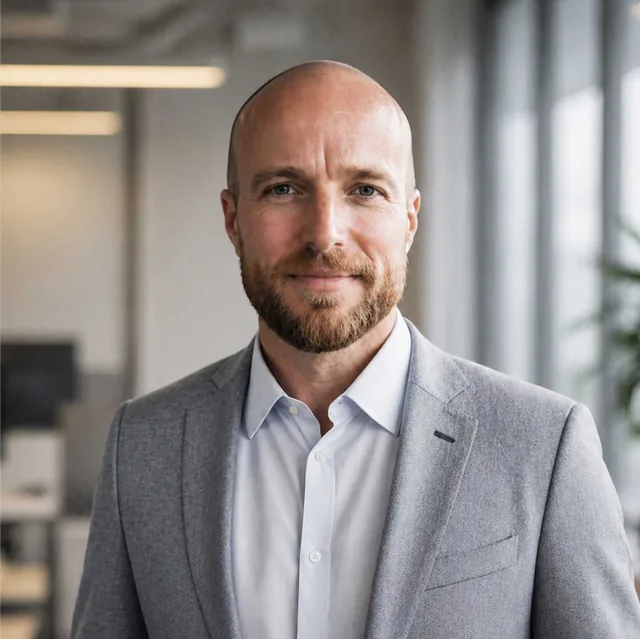
Last week, I redesigned and launched three interactive websites in seven days of part-time work: ProjectFresh, RAIZOR and Nexus, and almost all of it without leaving a chat box.
That included moving two domains off WordPress, migrating my blog, connecting forms and newsletter sign-ups, and checking all three sites for consistency.
My honest estimate is that, done the old way with an agency and rounds of back-and-forth on assets, each site would have taken a month or more, especially with the custom animations. Together, easily three months.
I did almost all of it by talking to Claude, my main AI tool, which could spawn and manage additional AI agents as needed. Once Claude was connected to my accounts, I never opened WordPress or my hosting company’s portal.
But the interesting part wasn’t just what the agents could build. It was how they worked together, and where I stayed involved.
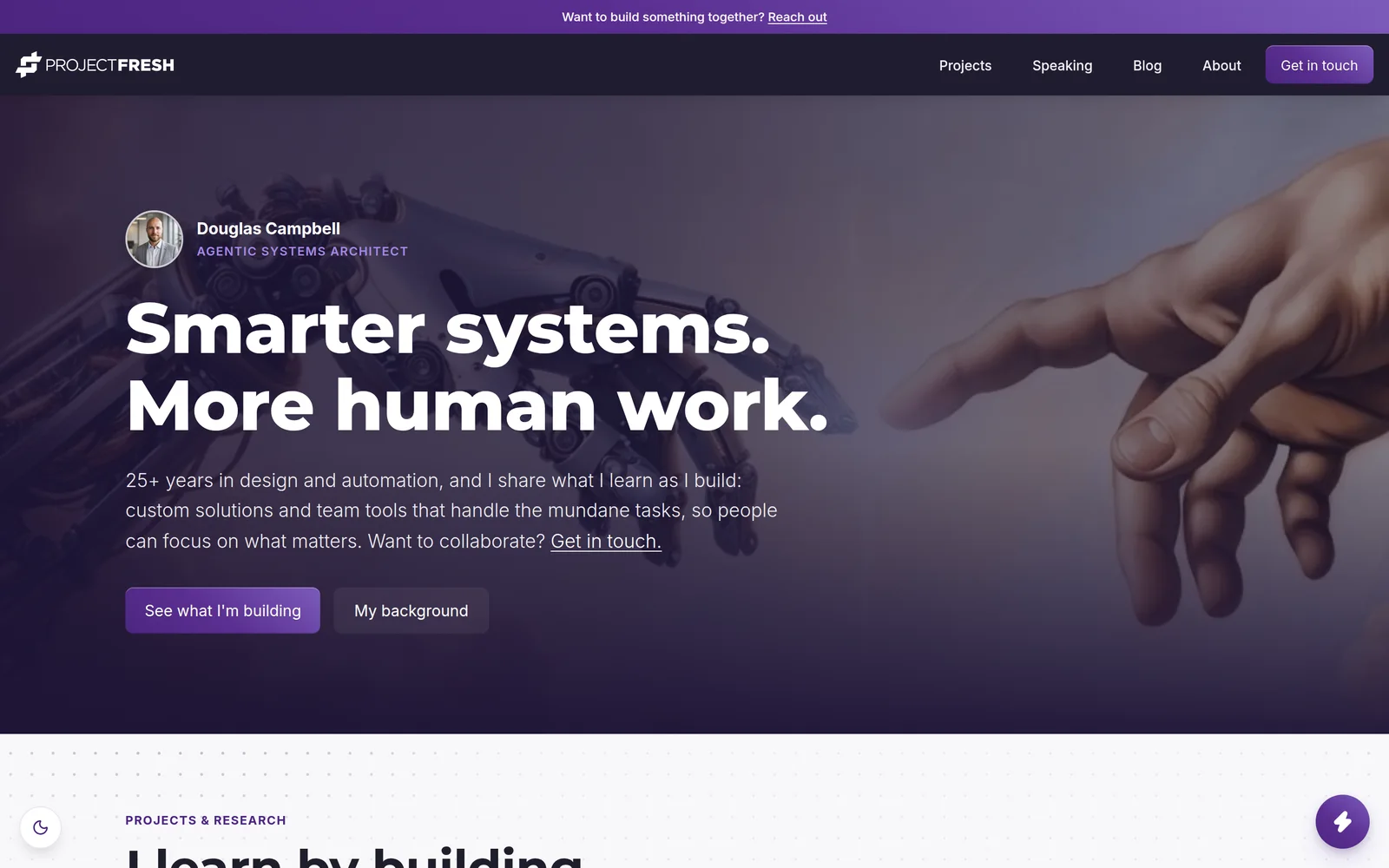
Three sites, with a clear job for each
I wanted these sites to feel connected without repeating each other.
- ProjectFresh is my home base: 25+ years of work, my projects and my writing.
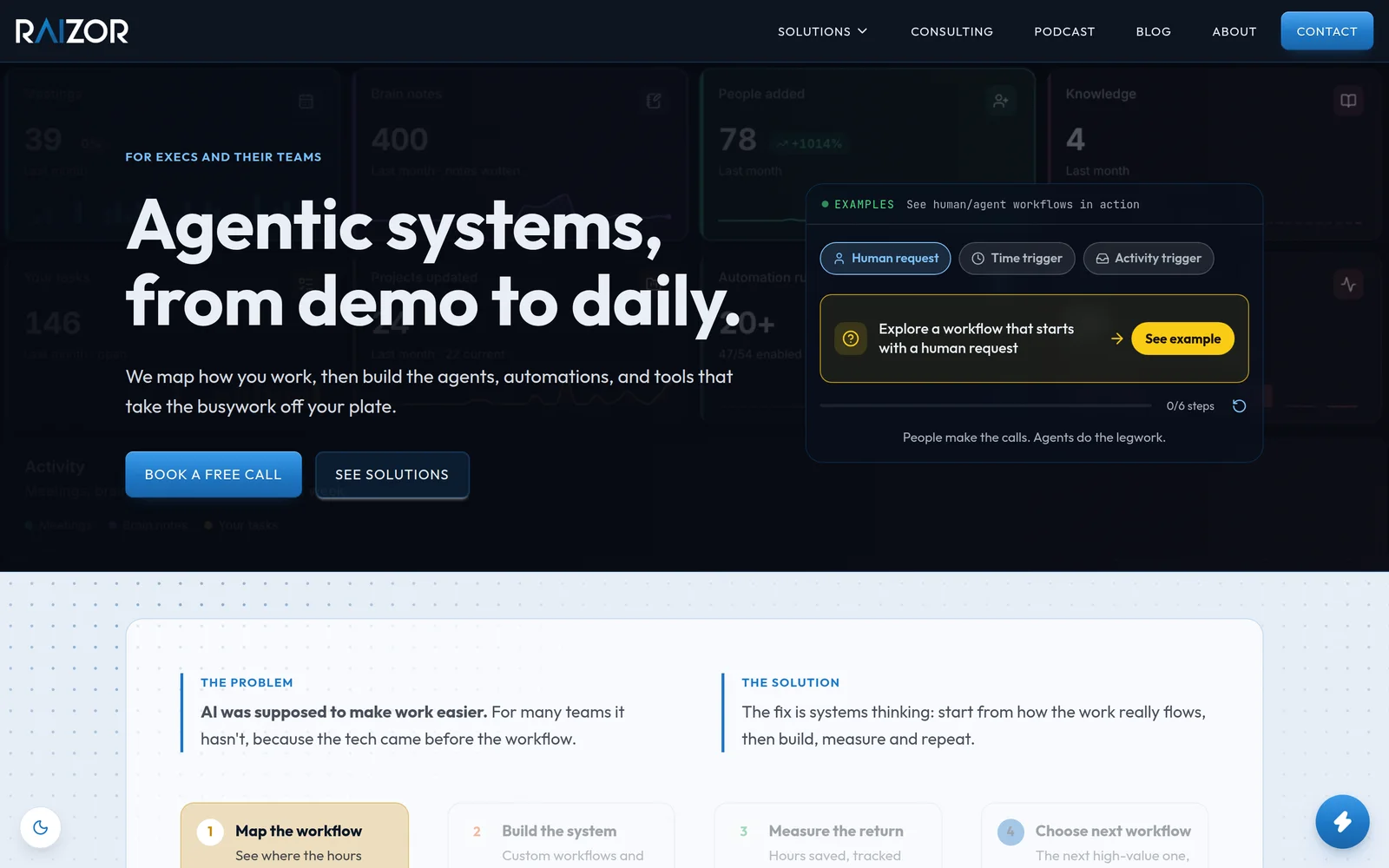
- RAIZOR is my studio: consulting, custom development, Soma, TeamCentral and the podcast.
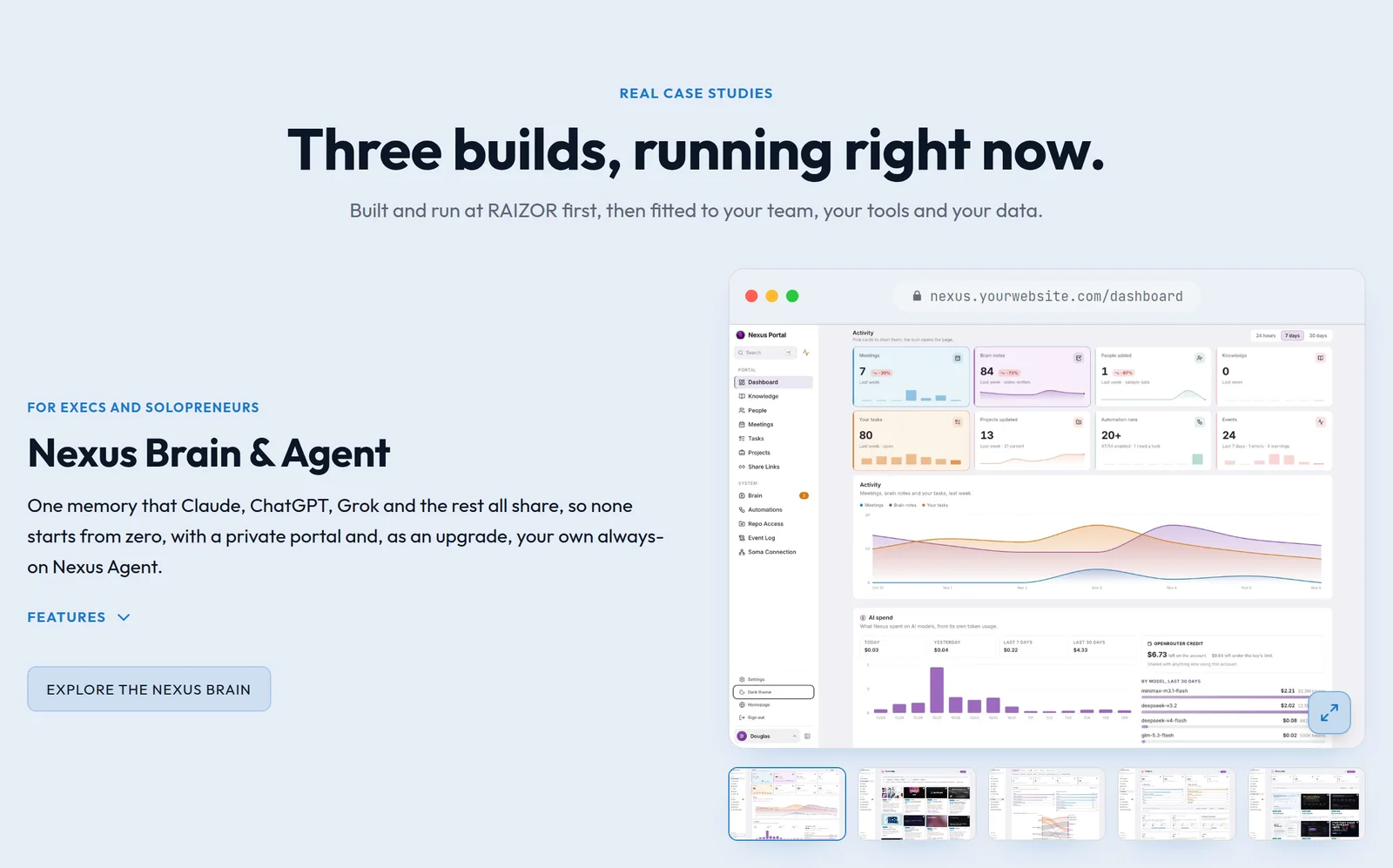
- Nexus is my agent platform: the assistant, shared brain and portal, as I build them.
They link to one another, so wherever you arrive, you can find the rest.
Shared memory made parallel work possible
I didn’t finish one site before starting the next. Claude's agents worked in parallel on my Mac and my Nexus server, in separate sessions on separate sites.
What kept them aligned was a shared memory. Each session ended with a short note: what got done, what I’d decided and what still needed attention. The next agent read that before starting.
That meant I wasn’t explaining the same decisions every time I opened a new conversation.
My role was still hands-on, just in different places. I wrote the copy for key moments, chose which ideas stayed, and approved every push. The agents handled much of the implementation; I stayed responsible for the taste, voice and decisions.
Let people try things, not just read about them
My design rule was simple: if something can be shown clearly, don’t bury it in a paragraph.
On RAIZOR, that meant interactive demos of agents and people working together, a department explorer showing before-and-after examples of AI in different teams, a five-stage build diagram, and galleries of real tools.
All three sites also have light and dark themes, one click apart.
Moving off WordPress, with approval at each live switch
Giving agents access to a hosting account isn’t the same as telling them to do whatever they want.
I connected them so they could manage domain settings, mailboxes, files and backups. Then we planned the migration with a way back at each step.
We backed up WordPress and kept it available at a separate address. Then we pointed the domains at the new sites, checked security, old links and email delivery, and told Google about the new pages.
My job was to approve each live switch. We didn’t need to roll back, but having that option was part of the plan, not an afterthought.
That distinction matters to me. Handing off the work doesn’t mean handing off responsibility.
One blog to maintain, not three
The agents brought over my WordPress posts, cleaned them up and fixed old links in 37 of them.
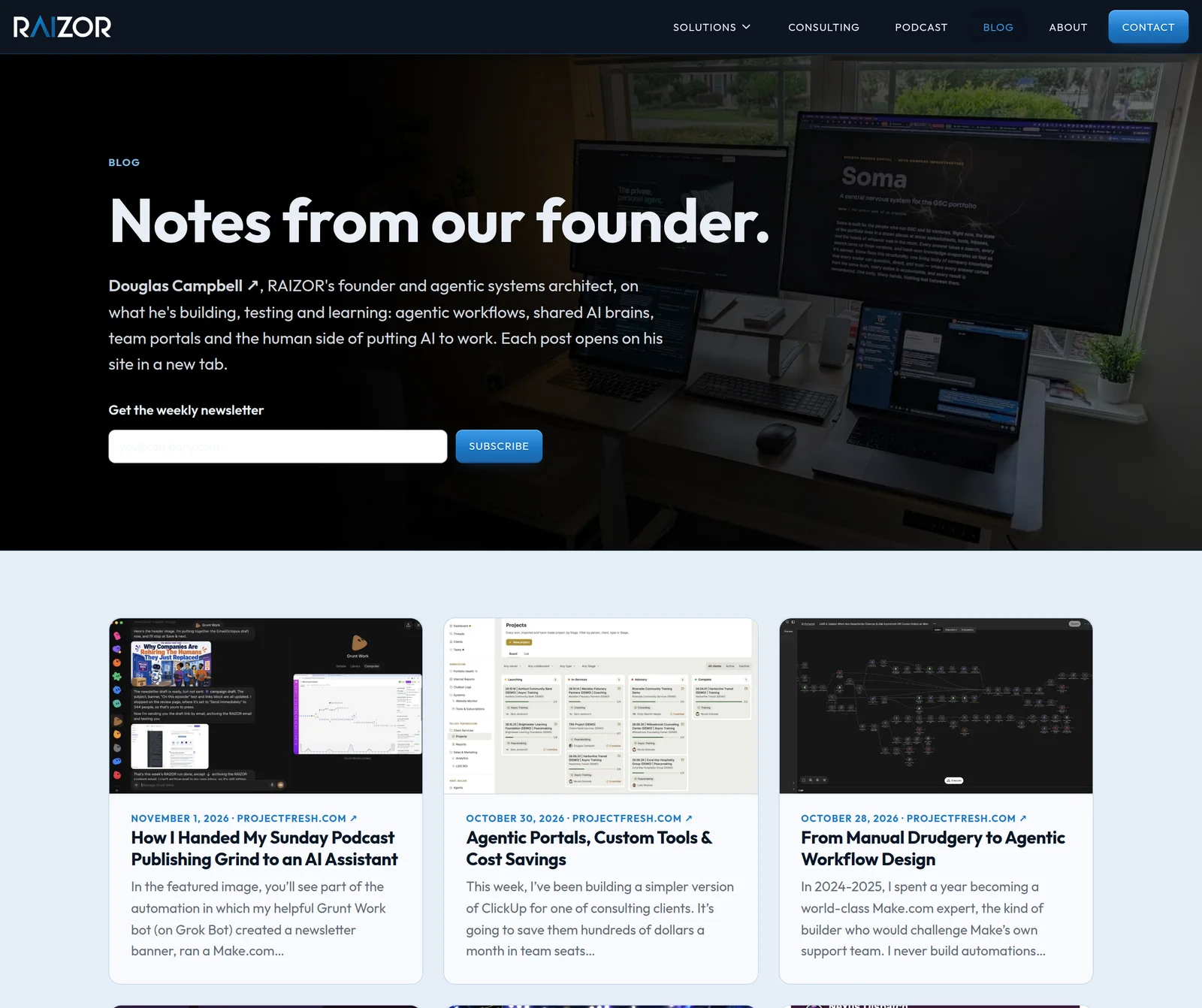
ProjectFresh now holds the original posts. Each post specifies which sites should list it, and RAIZOR and Nexus display its thumbnail and summary, linking back here.
So I can share relevant writing across all three sites without maintaining three copies. This post works the same way.
Connecting the work behind the pages
The sites also needed forms that did something useful.
I run my own automation server, n8n. Rather than setting up each workflow step by hand, I described what I wanted, and Claude built, tested and connected the workflows.
Newsletter sign-ups go to my email list. Contact messages arrive as a clean, branded email. New calendar bookings land in my contacts.
These aren’t the most visible parts of a website, but they’re part of making it work day to day.
The final check caught what had drifted
After launch, I asked the agents to read all three sites side by side and flag anything that didn’t line up.
They found things I needed to resolve. One site described a product as launched; another called it a pilot. Podcast figures and client results didn’t match. Even my own title varied.
I made each decision once, and the agents applied it across the sites. They aligned titles and descriptions, standardized the podcast count to 15,000+ listens on every page and removed dead links.
This was a useful reminder: generating pages isn’t the same as keeping them accurate. A consistency check still needs someone to decide what’s true.
The system matters more than the individual tools
What made this work wasn’t simply having access to AI. It was the setup around it:
- Shared memory, so work could continue across sessions.
- Access to the accounts needed to get things done.
- Approval gates before live changes.
- A clear split between what I decided and what I handed off.
The point isn’t to replace people. It’s to lighten the load so you and your team have more time for the work that needs your judgment.
That’s what I build for clients: systems that connect the tools to the work, with people still making the decisions that matter.
If you’d like to explore what that could look like in your business, let's talk.