
Projects & research
I learn by building.
I run my work on systems I create, then deploy productive successful prototypes for others to use. Each starts as a question about how humans and AI collaborate. Tech specs live in my R&D lab ↗.
01 · Personal agents
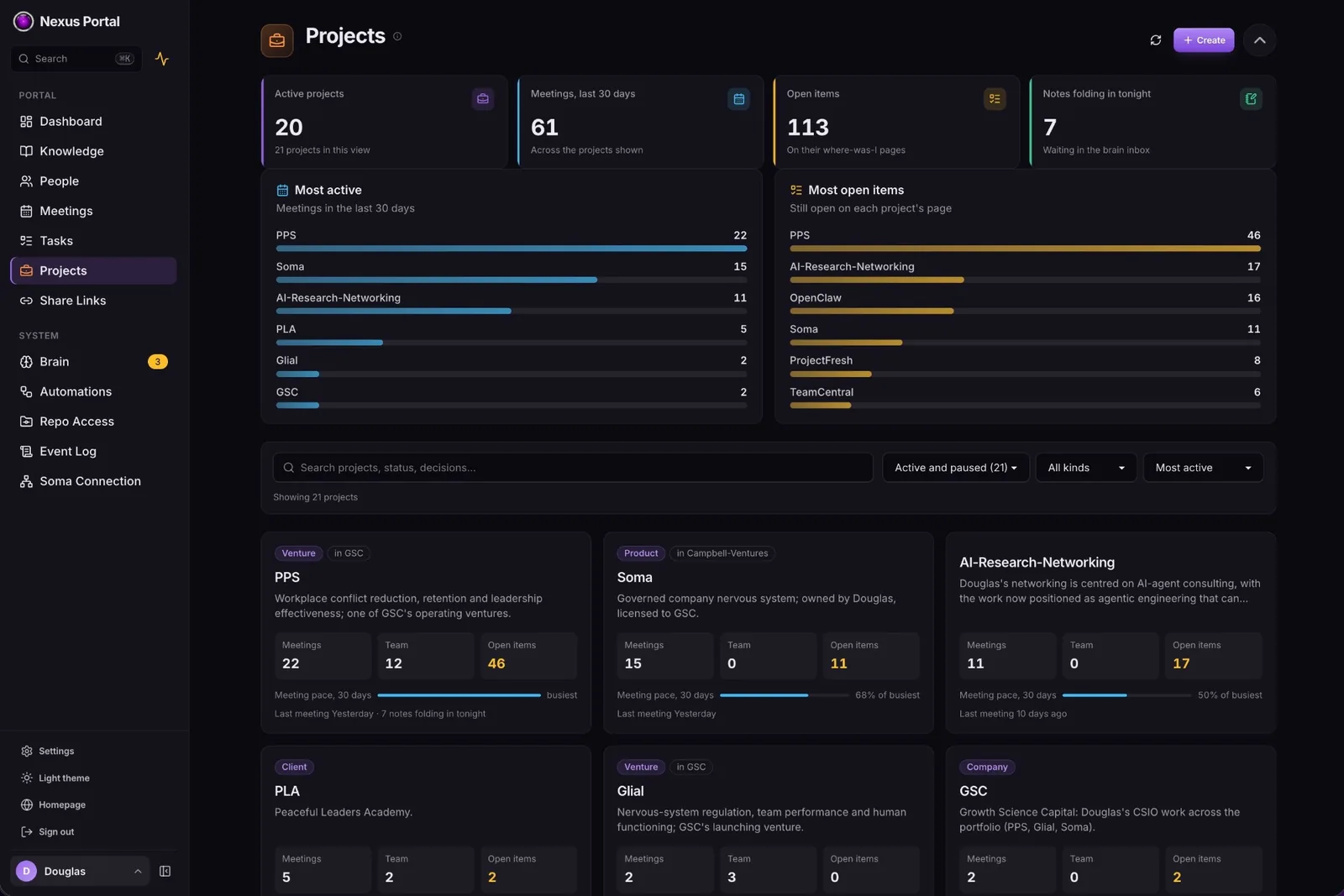
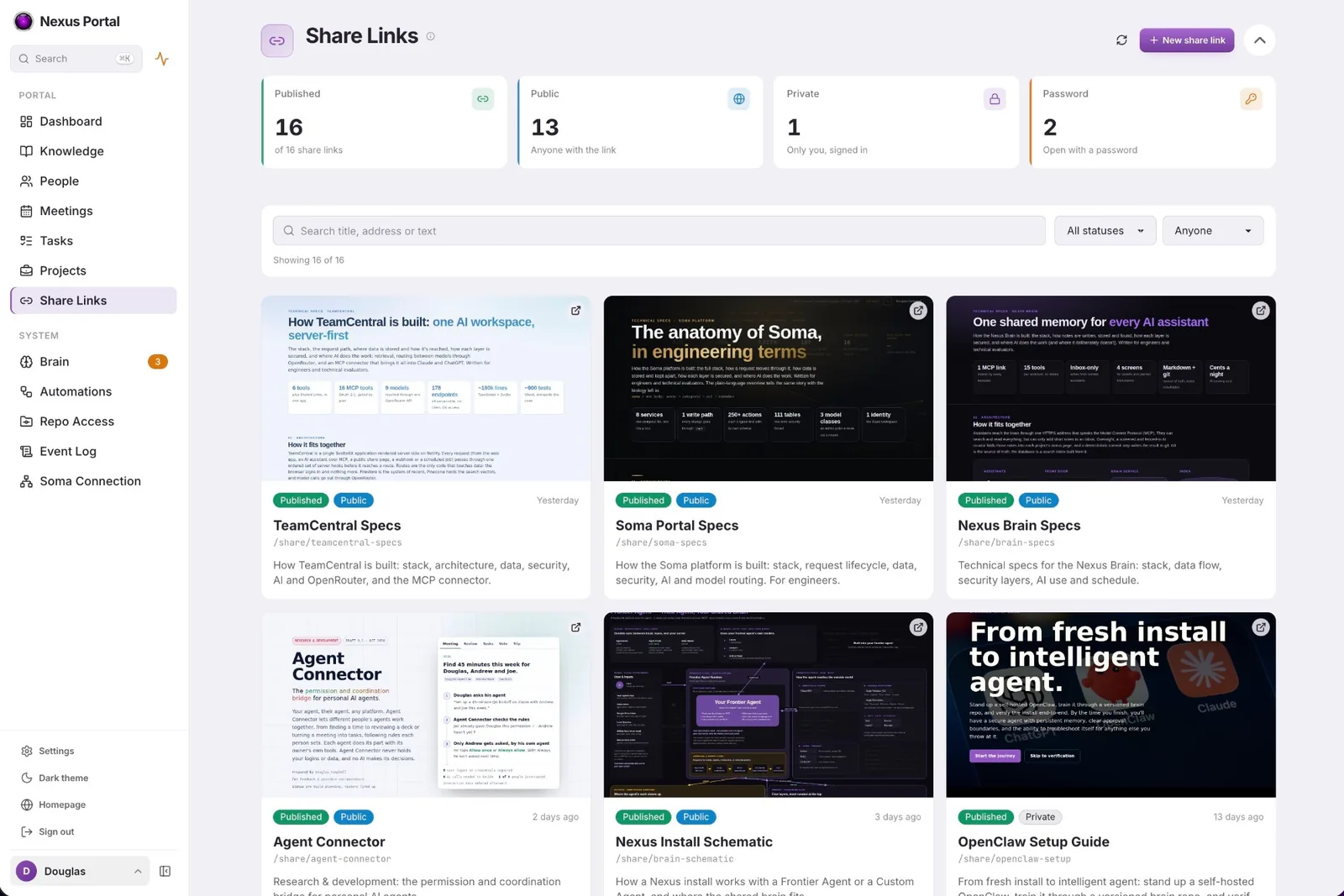
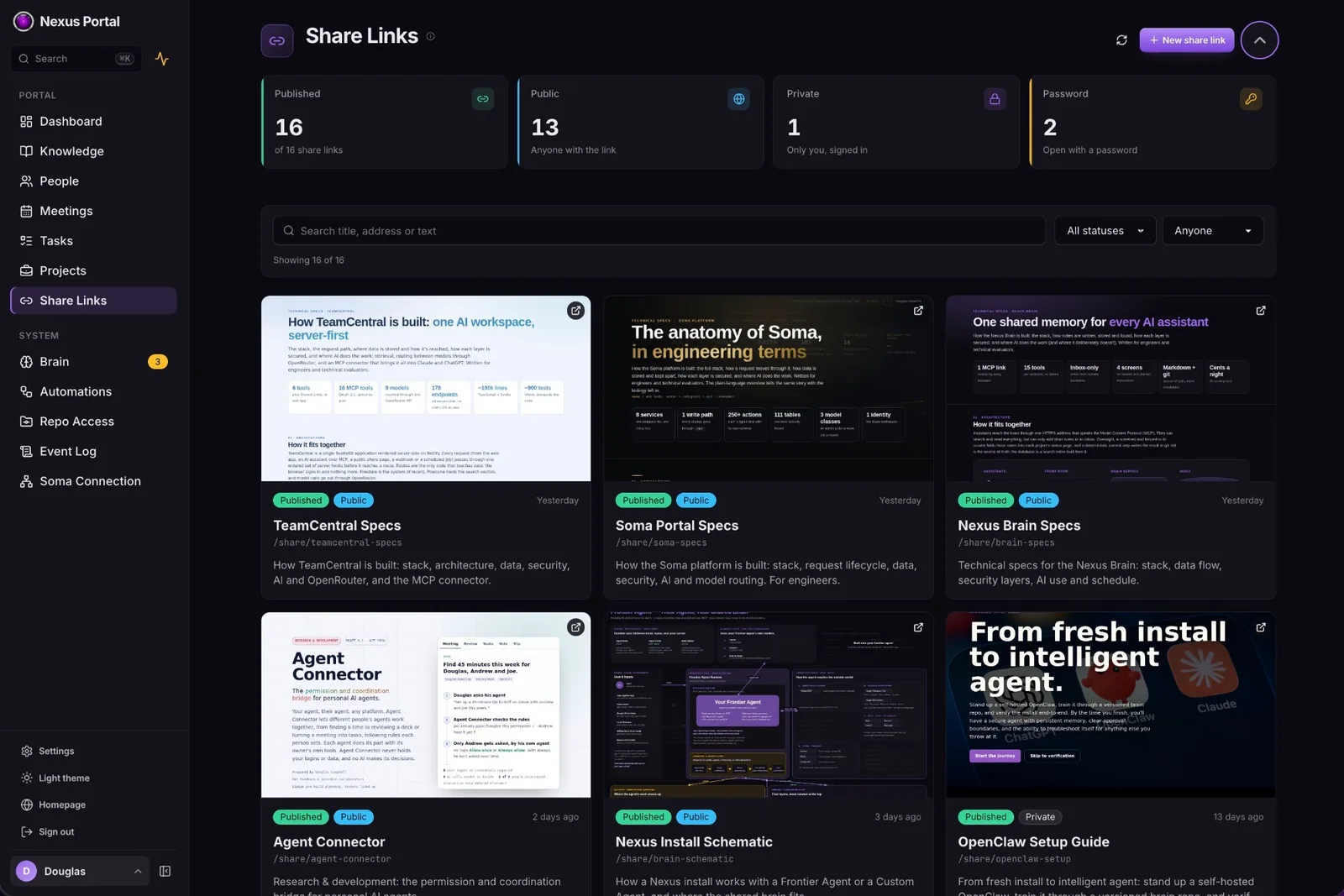
Nexus Assistant & Brain
What if I had my own always-on assistant, and every AI I use shared one memory?
What I built
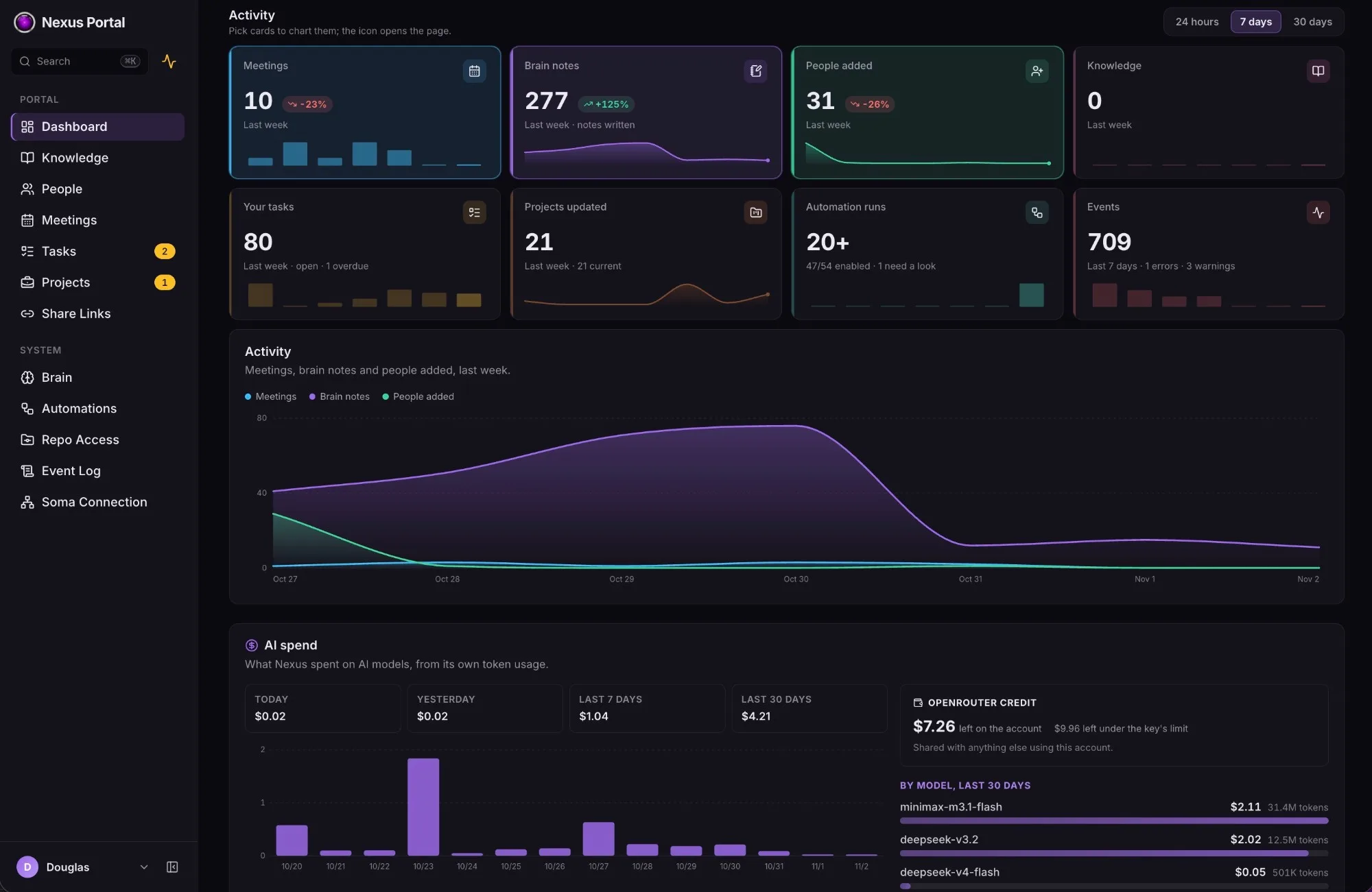
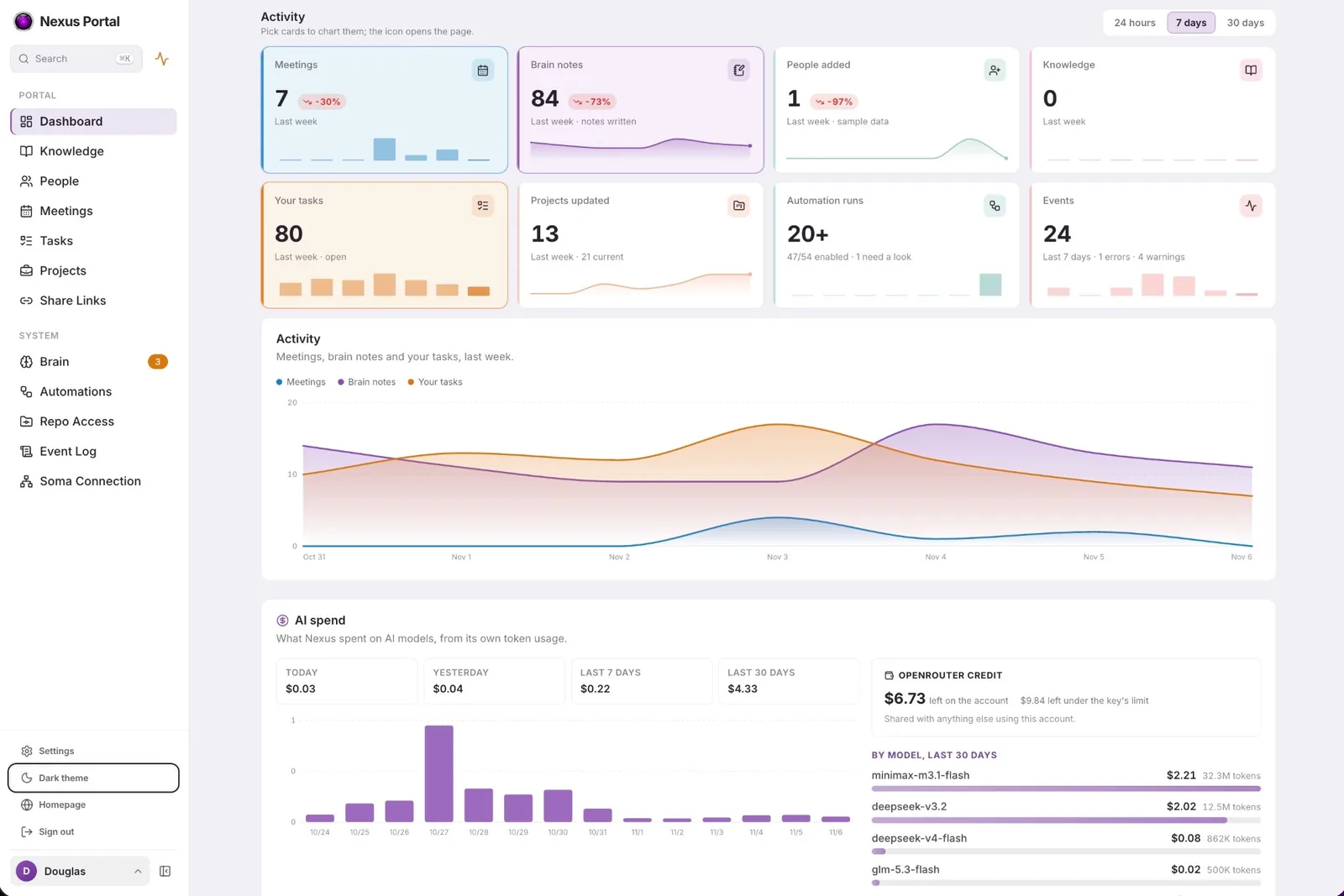
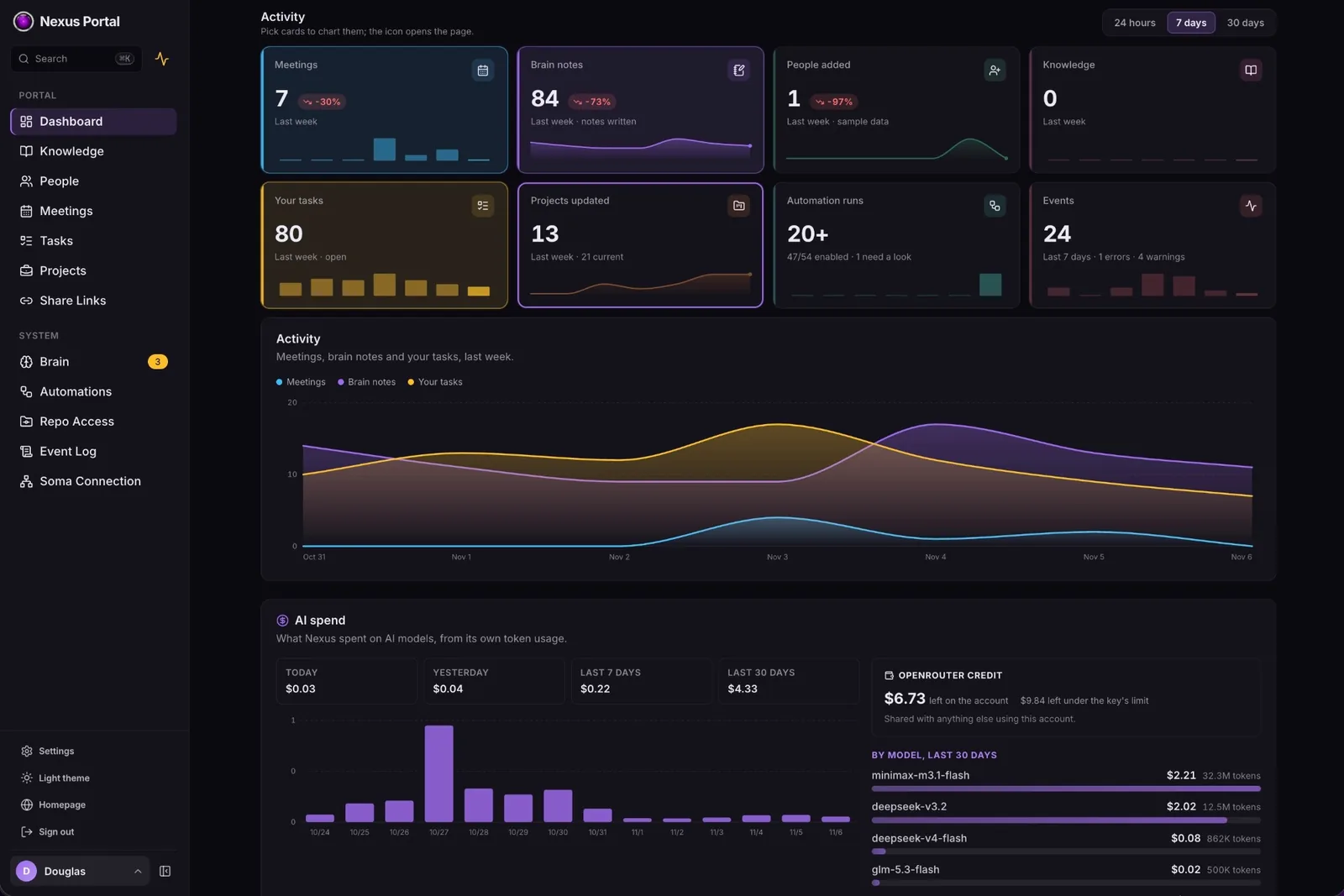
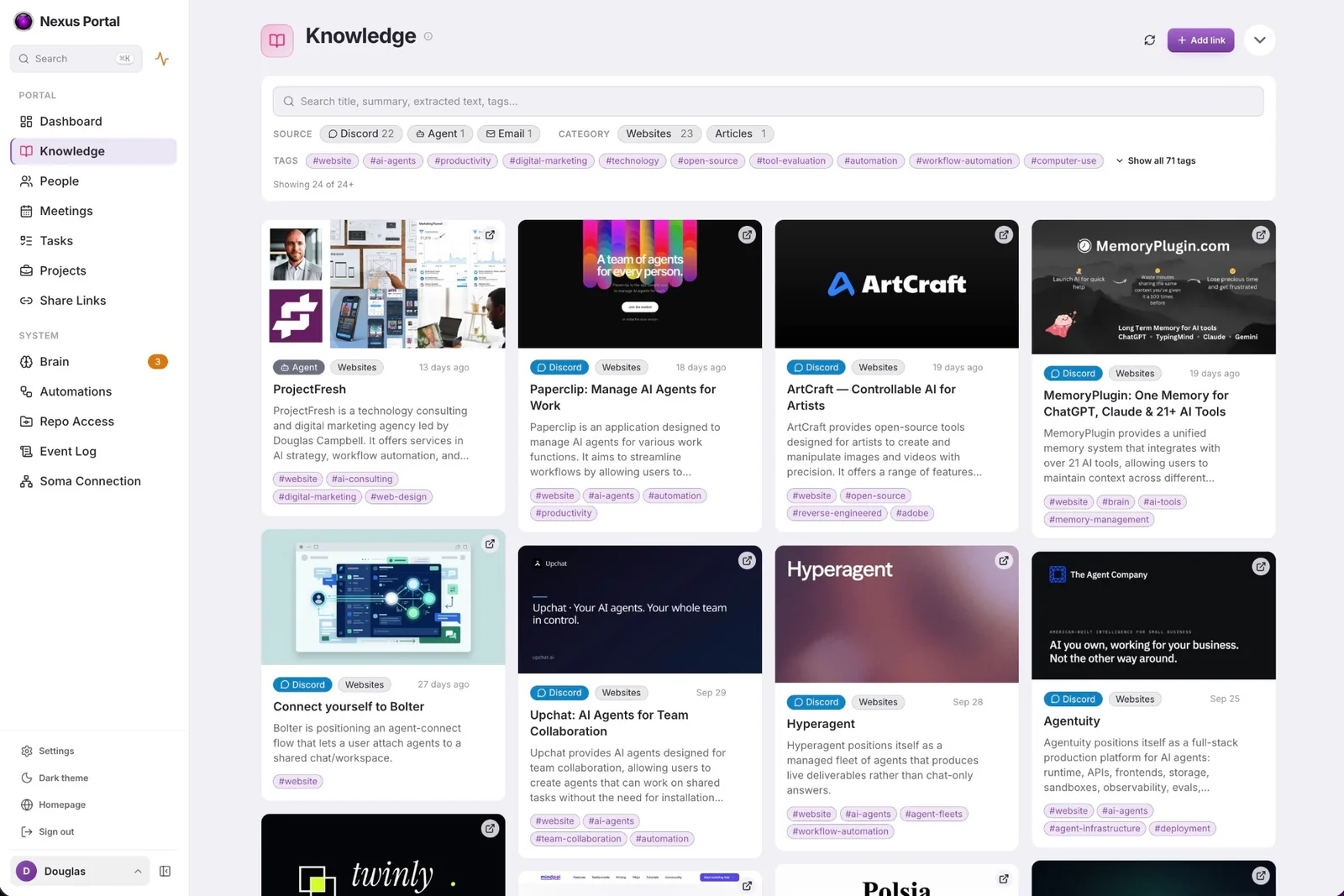
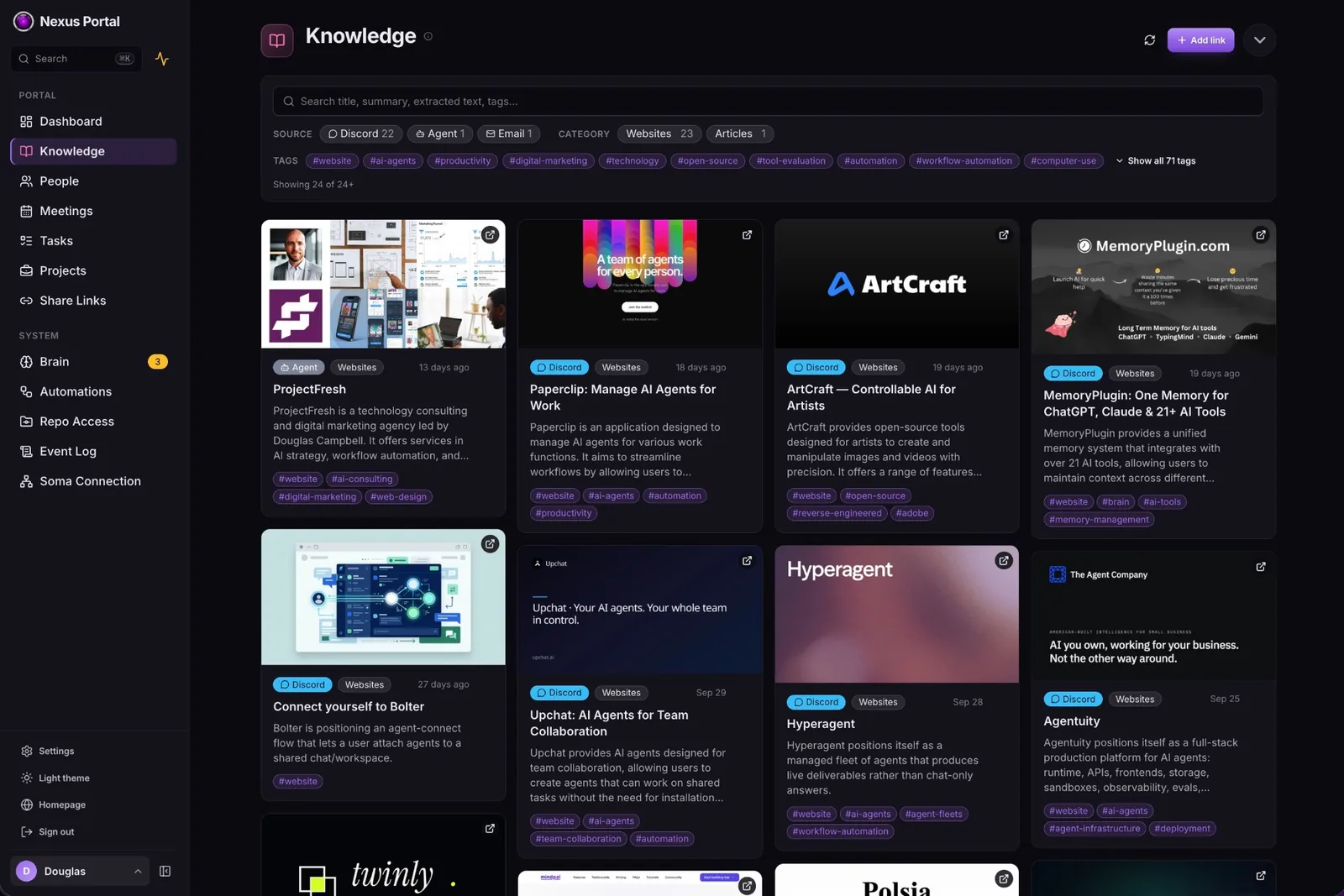
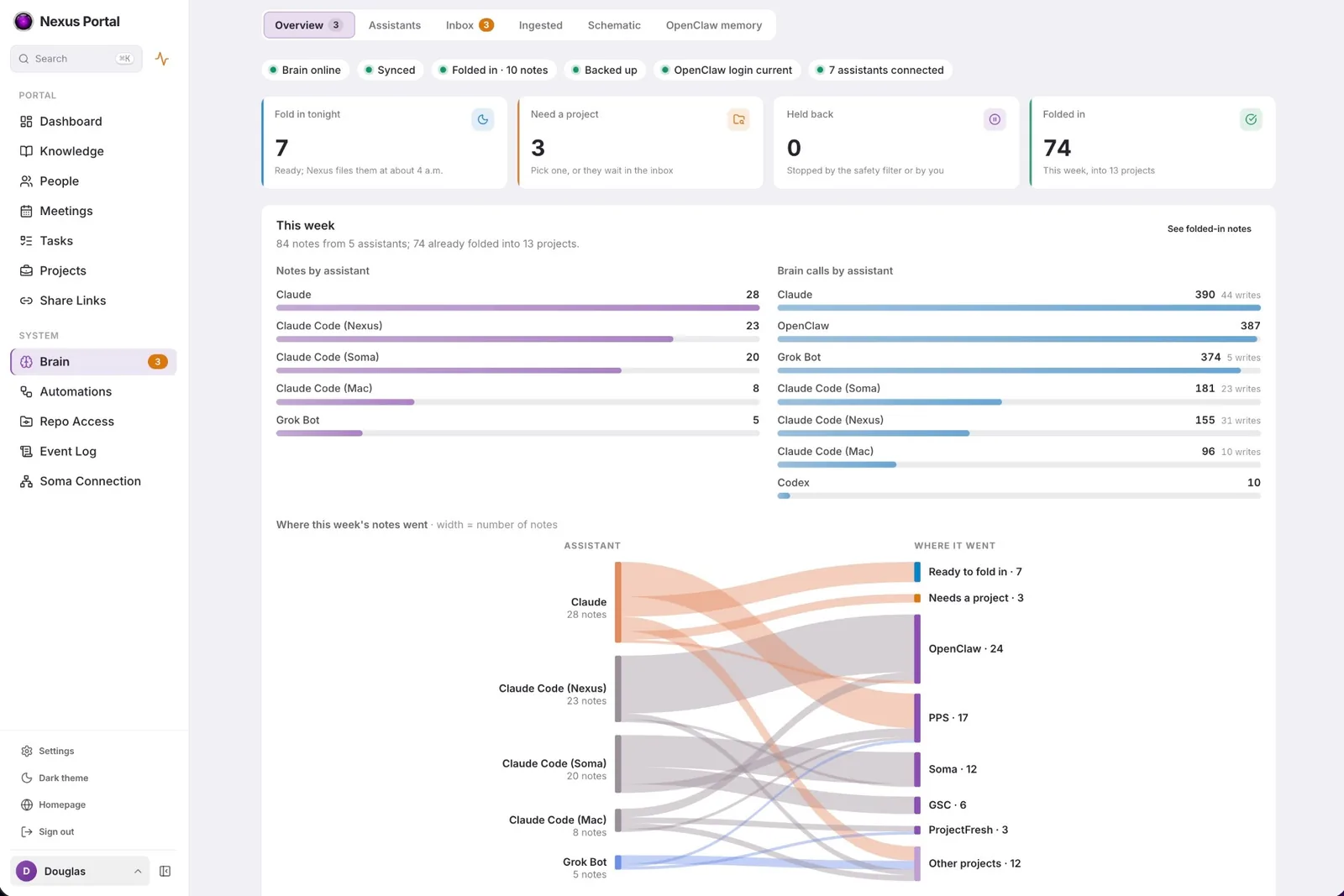
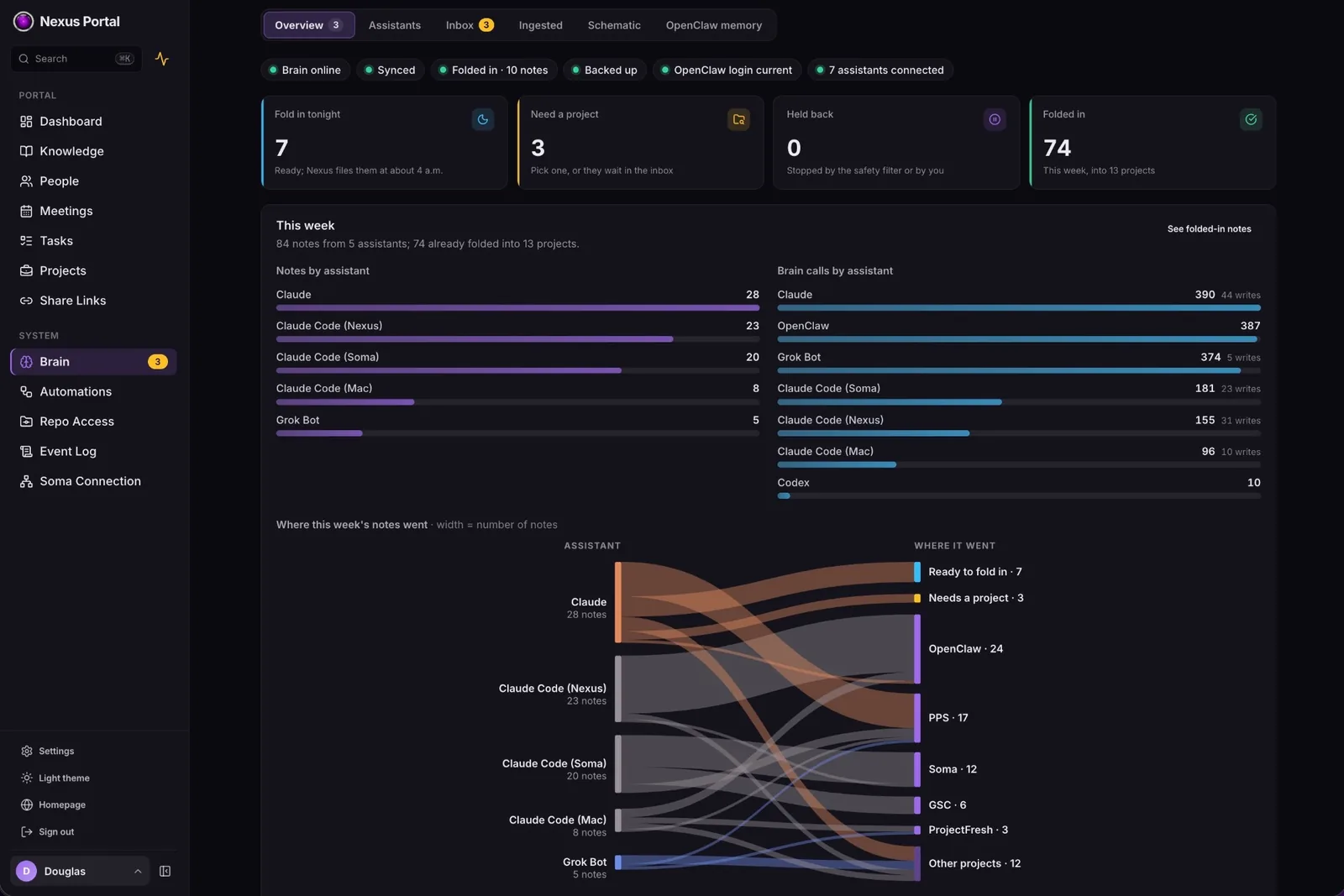
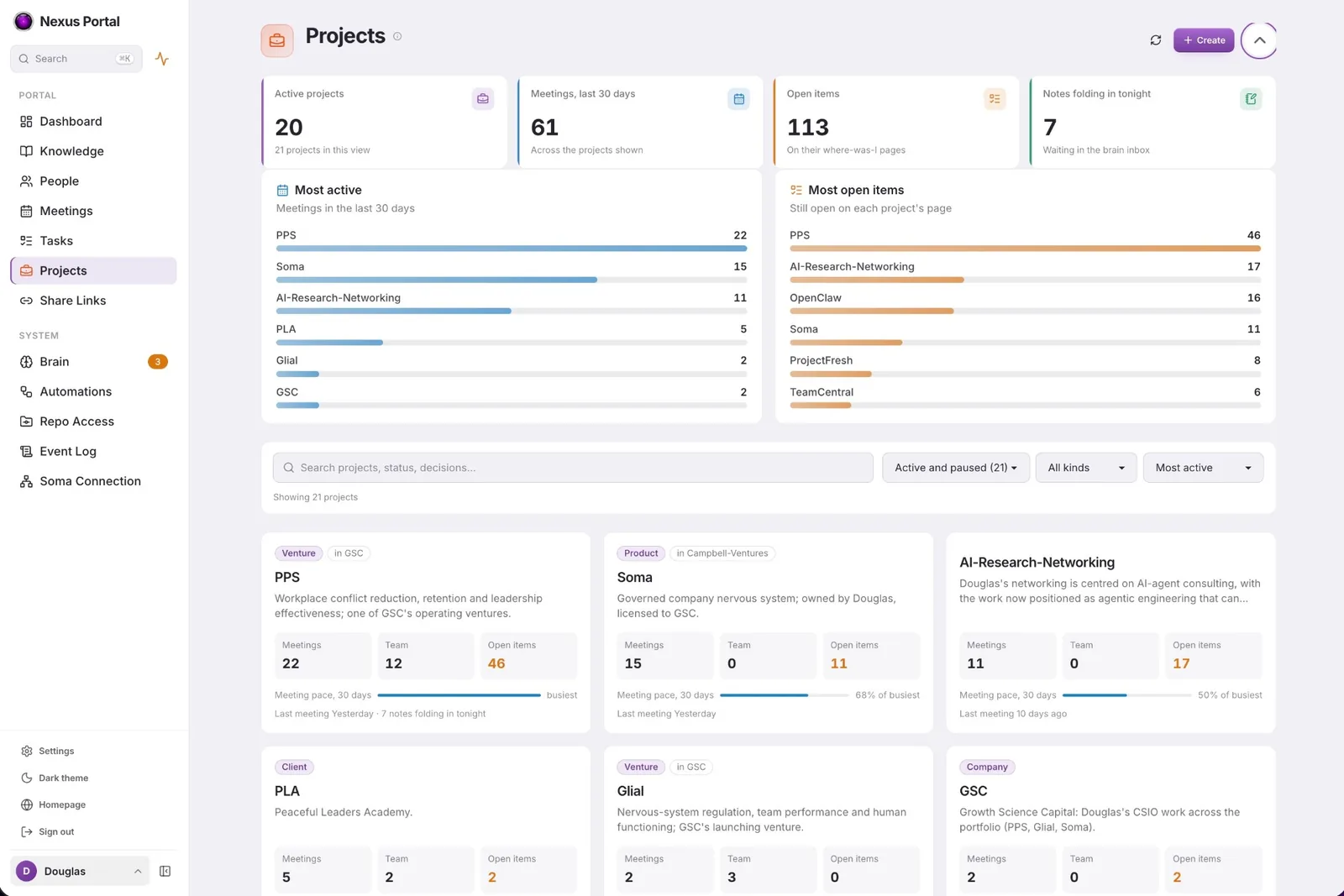
Nexus is my own assistant, in daily use. It began as one agent on Discord and now spans several assistants and computers, tracking my work, meetings, messages and tasks and running the routine jobs. A portal shows what it knows and does, and lets me correct it.
The Brain is the memory underneath: one source Claude, ChatGPT, Grok and the rest all read, so none starts from zero. Every note traces to the assistant that wrote it, and nothing is overwritten.
What I learned
- Memory makes an assistant useful: one shared brain beats five that start over.
- Track which agent adds each memory, so none overwrite each other.
- Trust comes from guardrails: I approve anything that sends, spends or publishes.
- Working with agents takes management, so let them help manage you too.
02 · Team collaboration
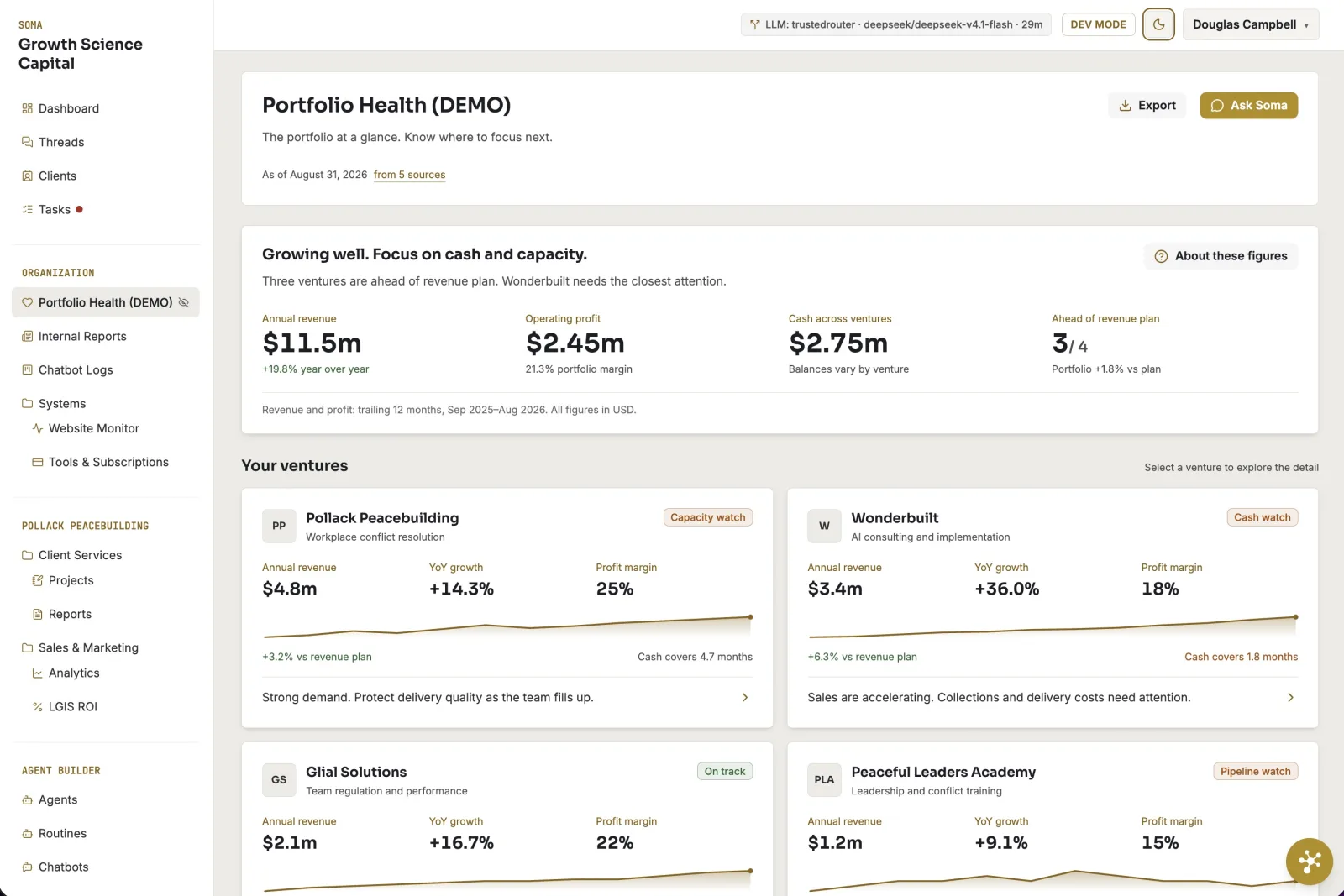
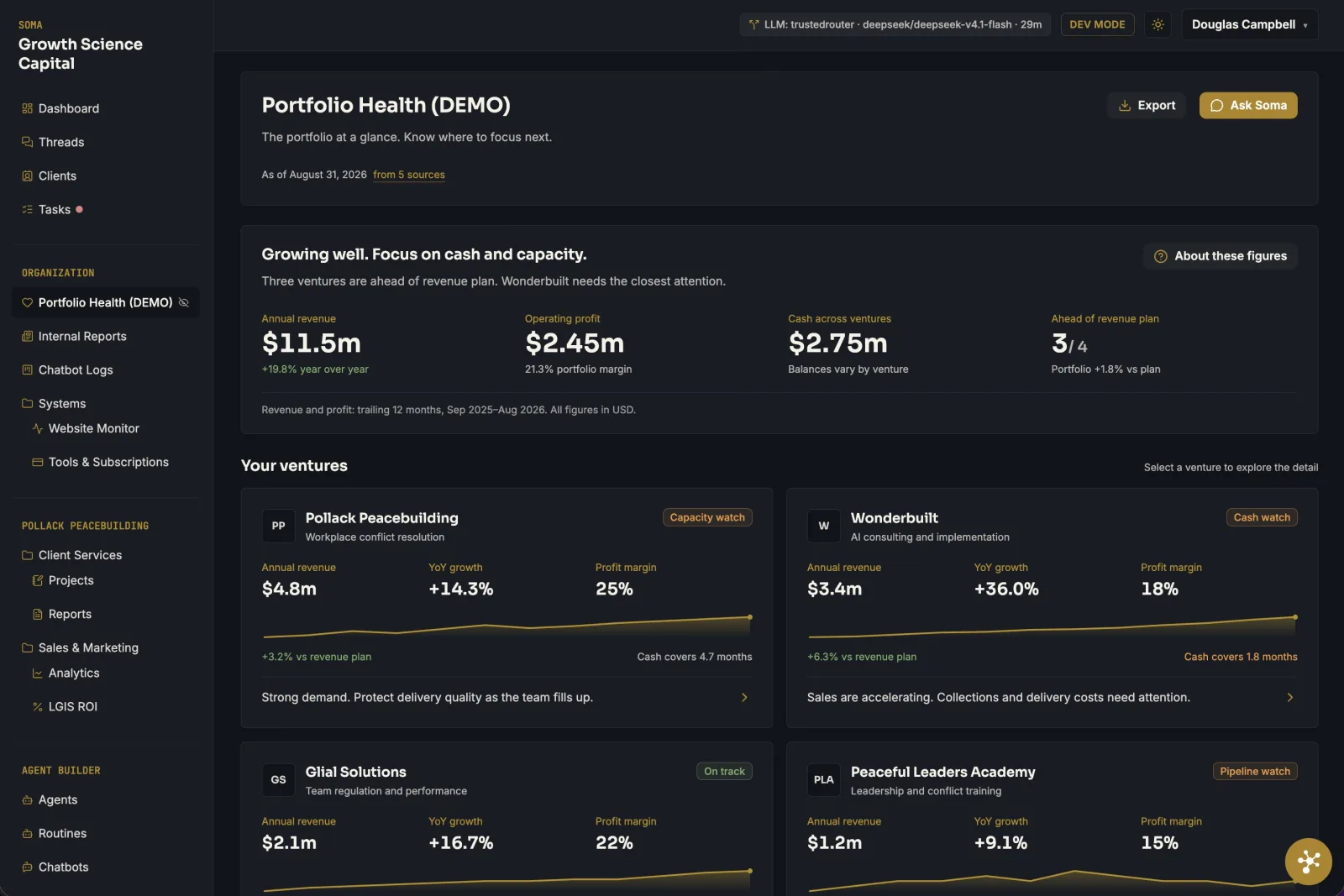
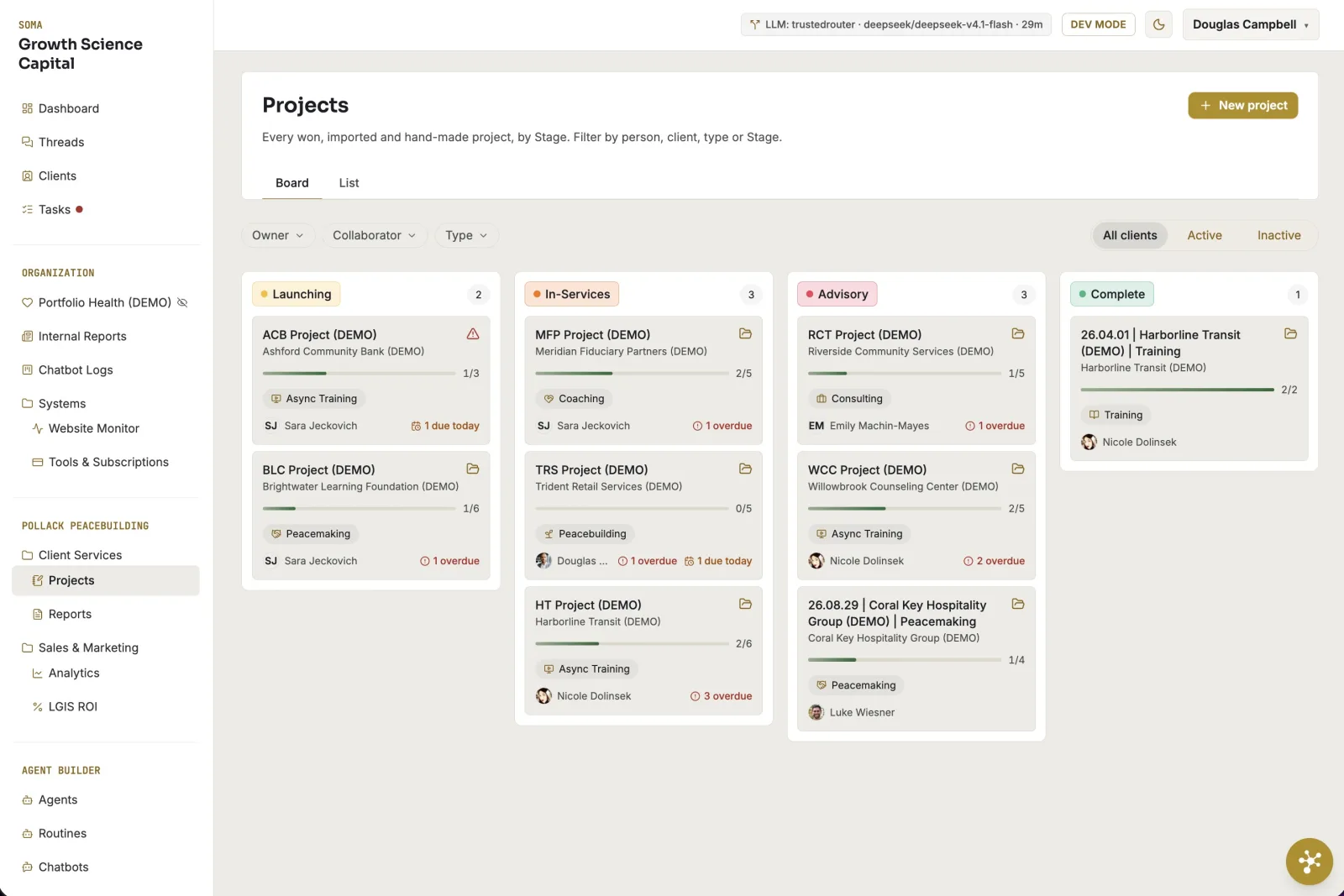
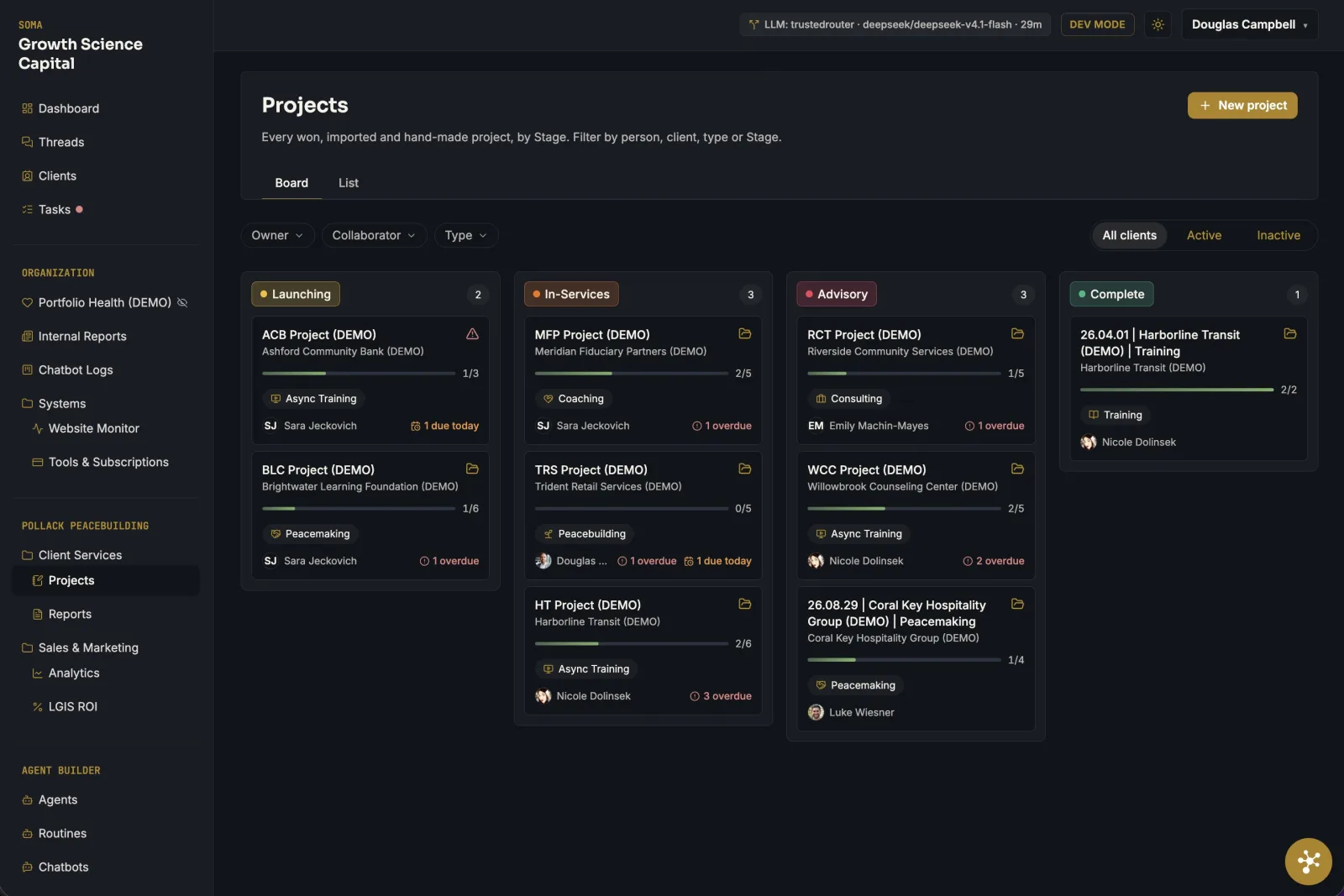
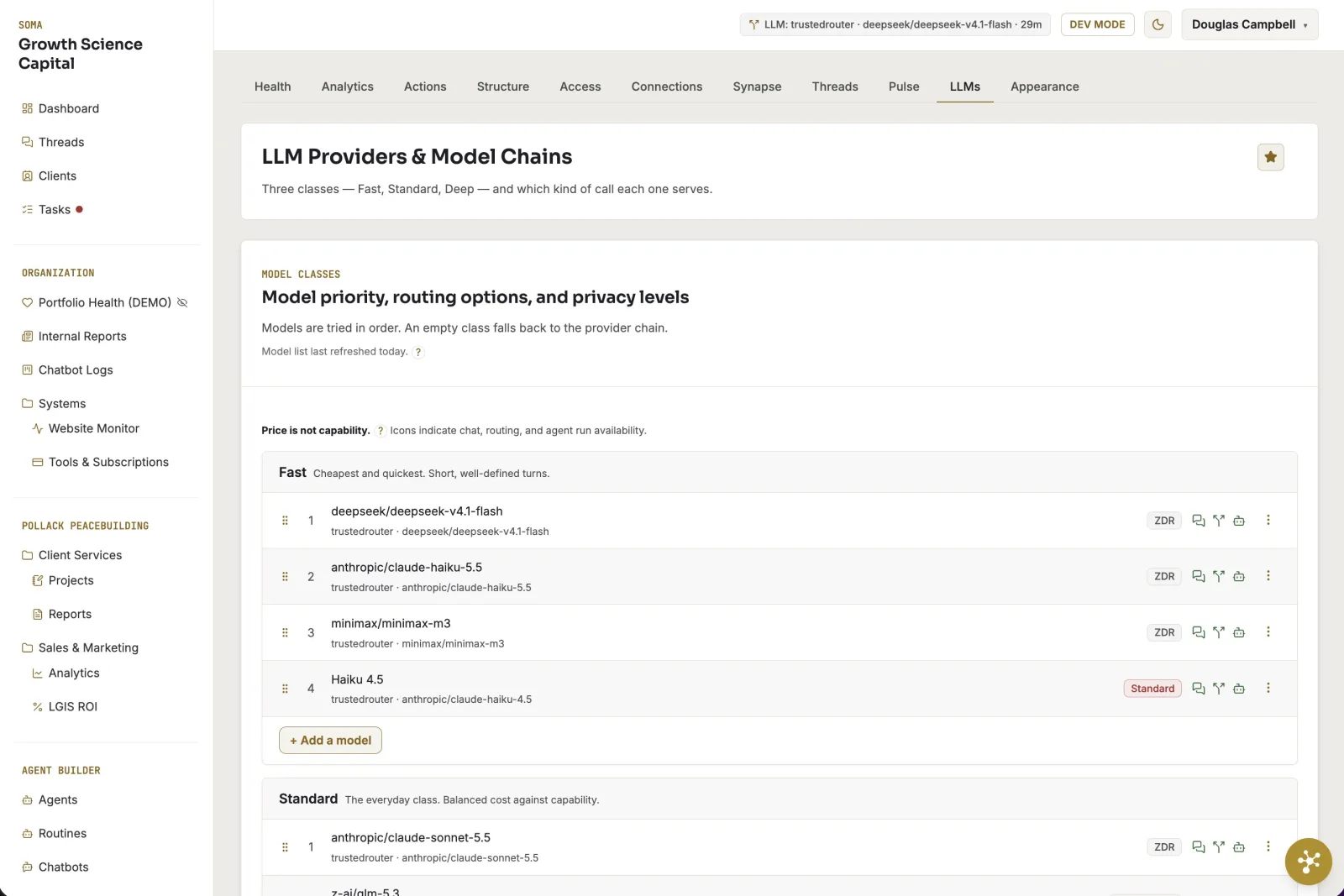
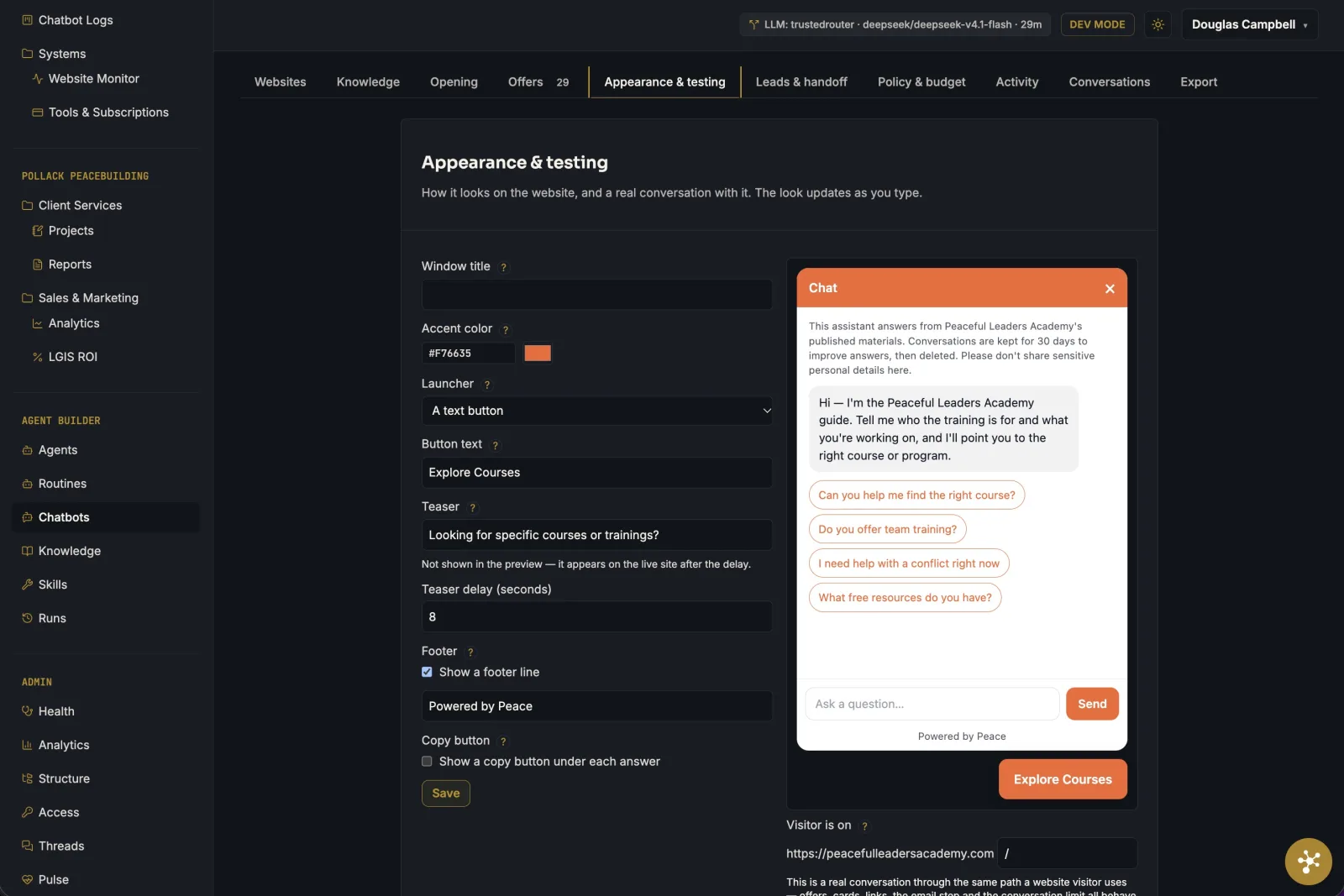
Soma Platform
What if a team could share agents, tools and knowledge from a central source?
What I built
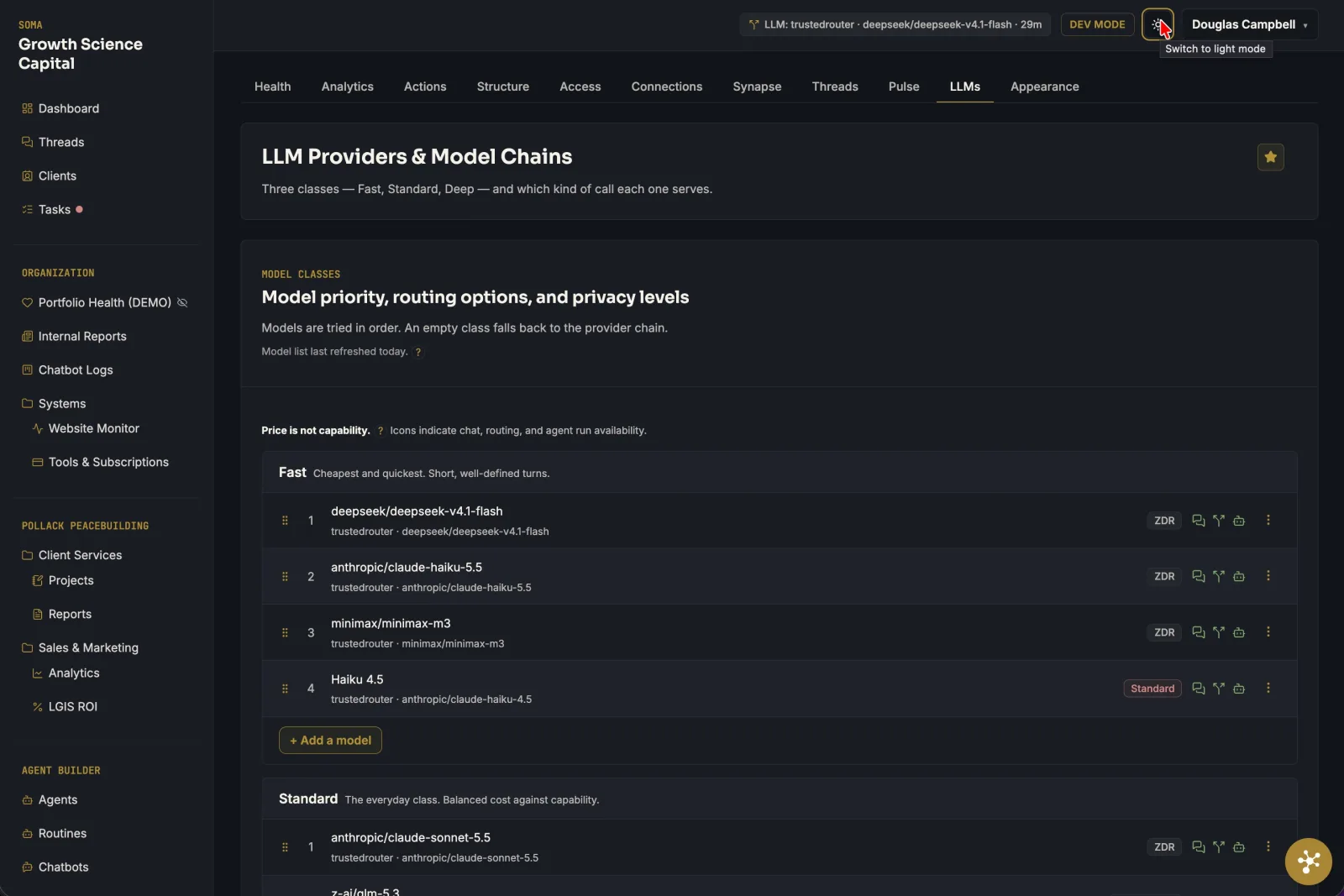
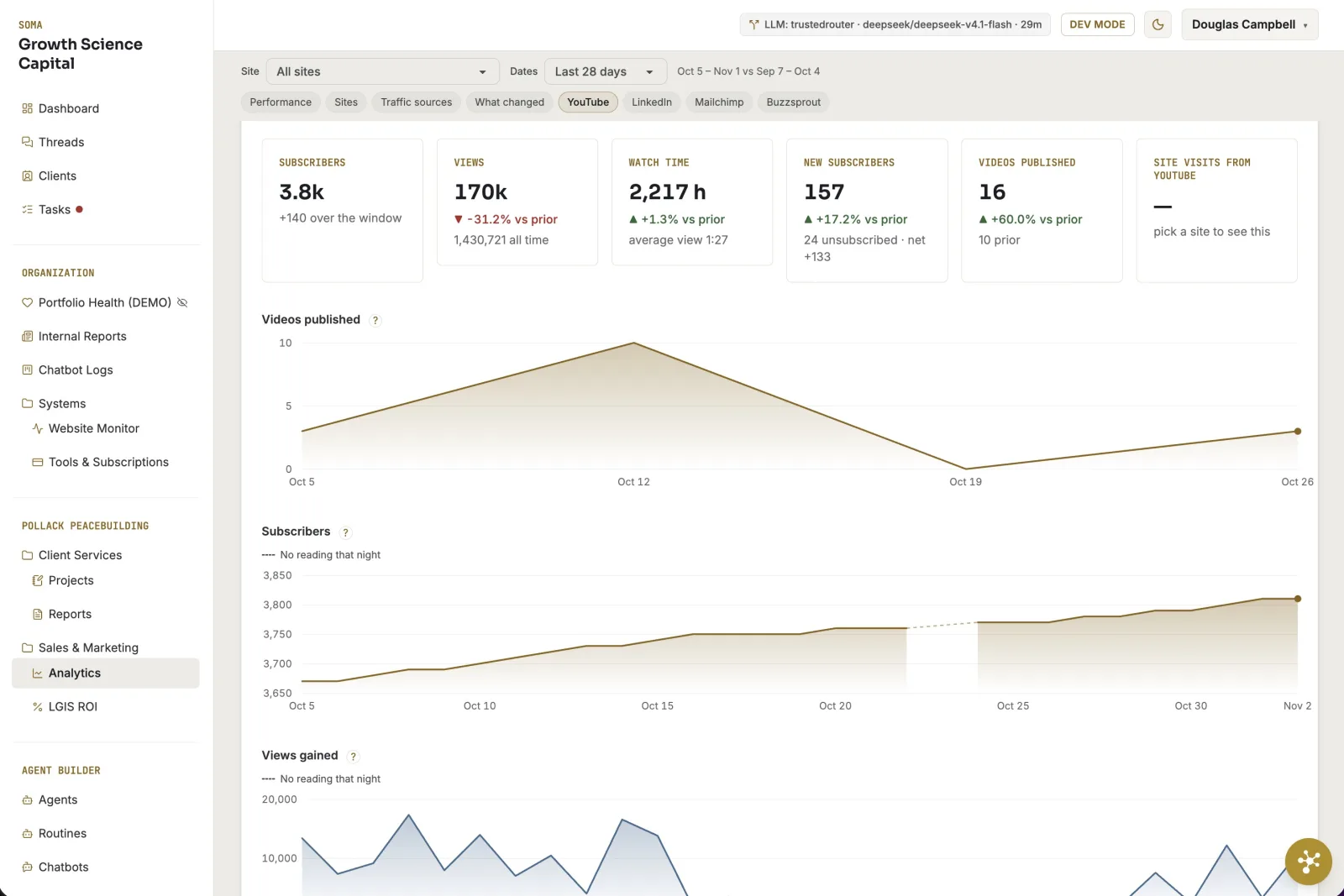
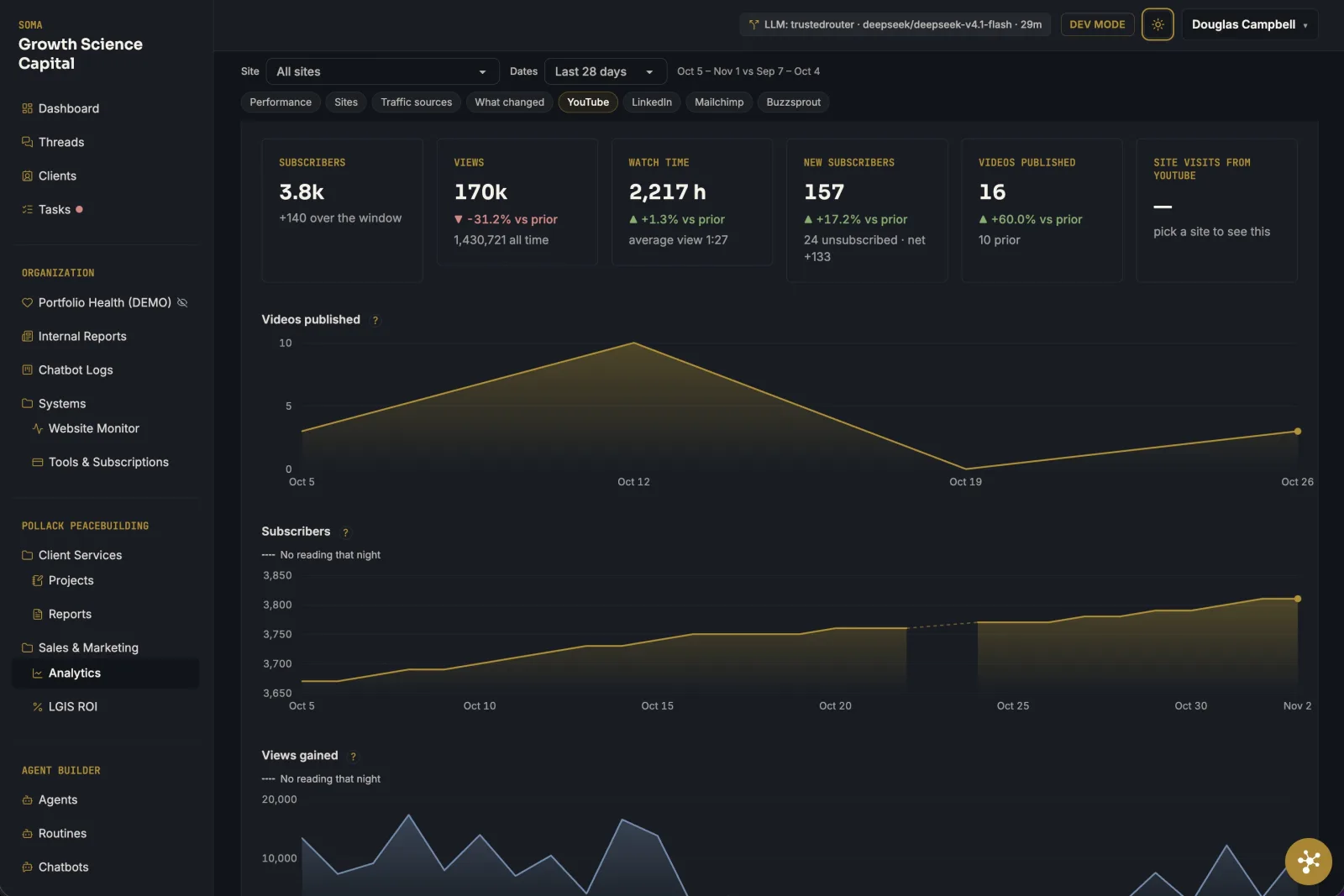
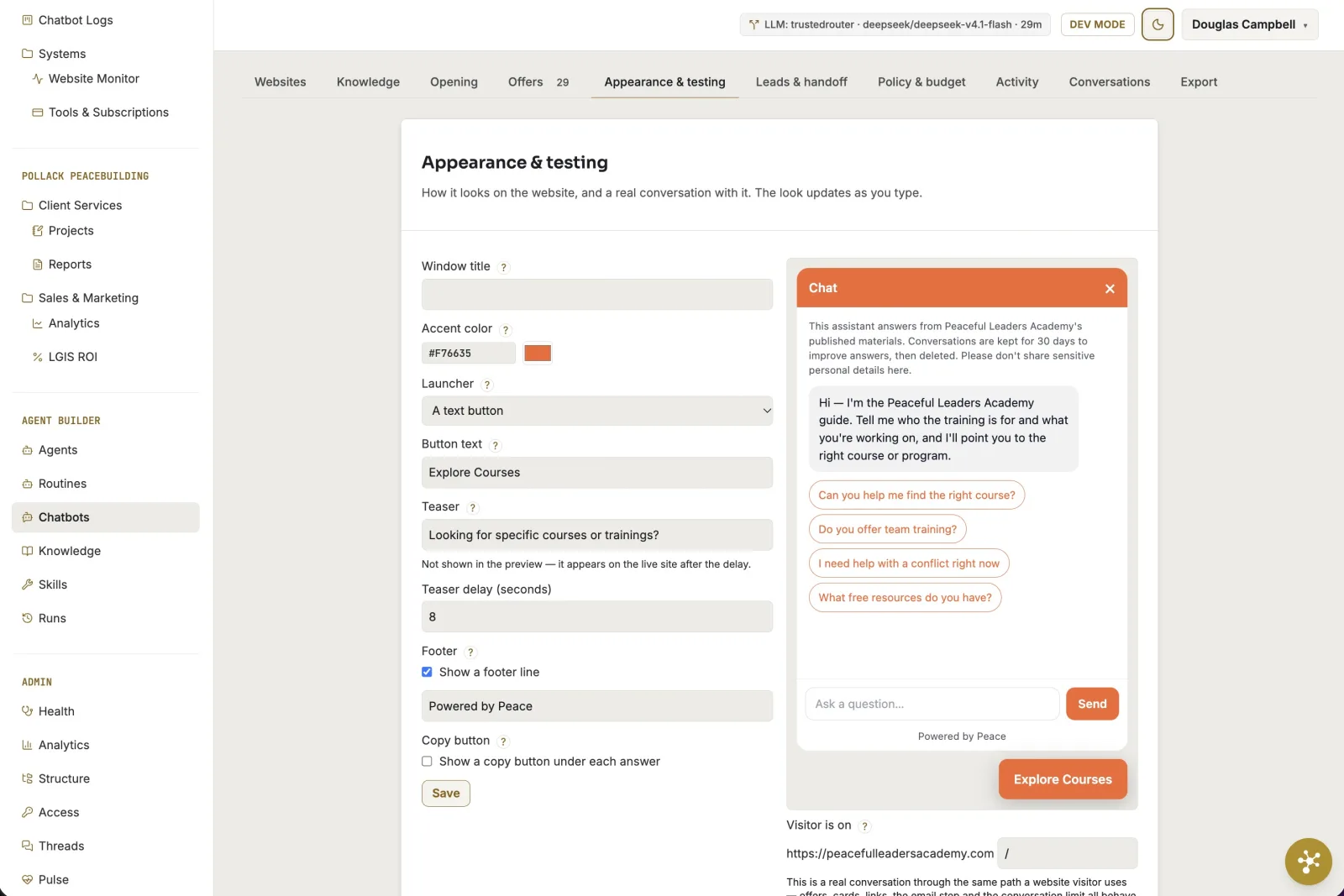
Soma gives each team member their own AI agent, in Slack and a portal, sharing one brain. Agents run automations, update records and send reports, and one gate approves and logs every action.
I built it as CSIO at Growth Science Capital: each portfolio venture gets its own portal, separate data and end-to-end encrypted LLMs.
What I learned
- How to govern agents that run automations, update records and send reports
- Agents must act, not just chat, and every action needs an owner, an approval rule and a log
- Access follows the org chart: granted once, flowing down, not per tool
- Teams need custom builds, with scoped access permissions and private data
03 · App design
TeamCentral
How far can one designer get with AI as the engineering team?
What I built
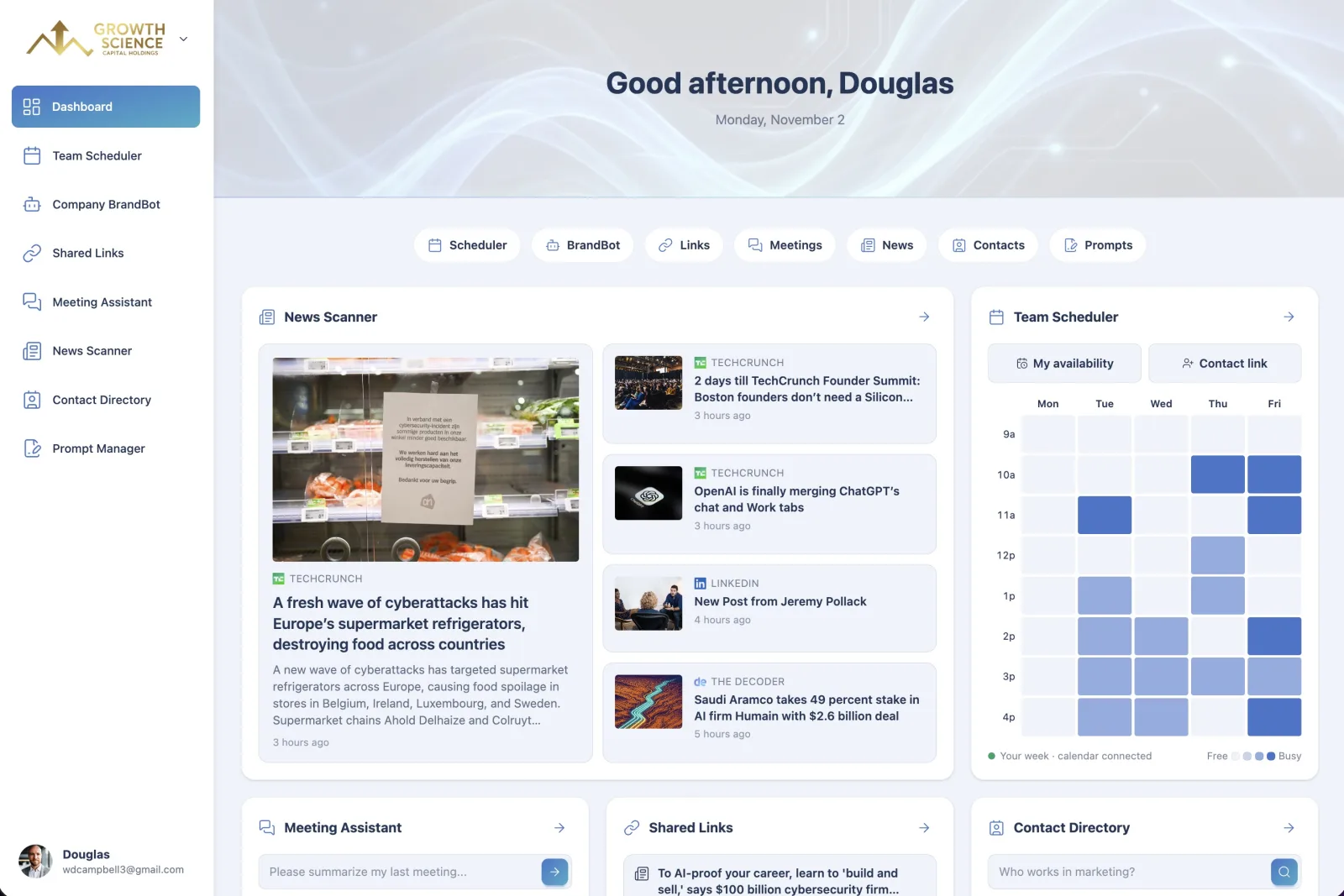
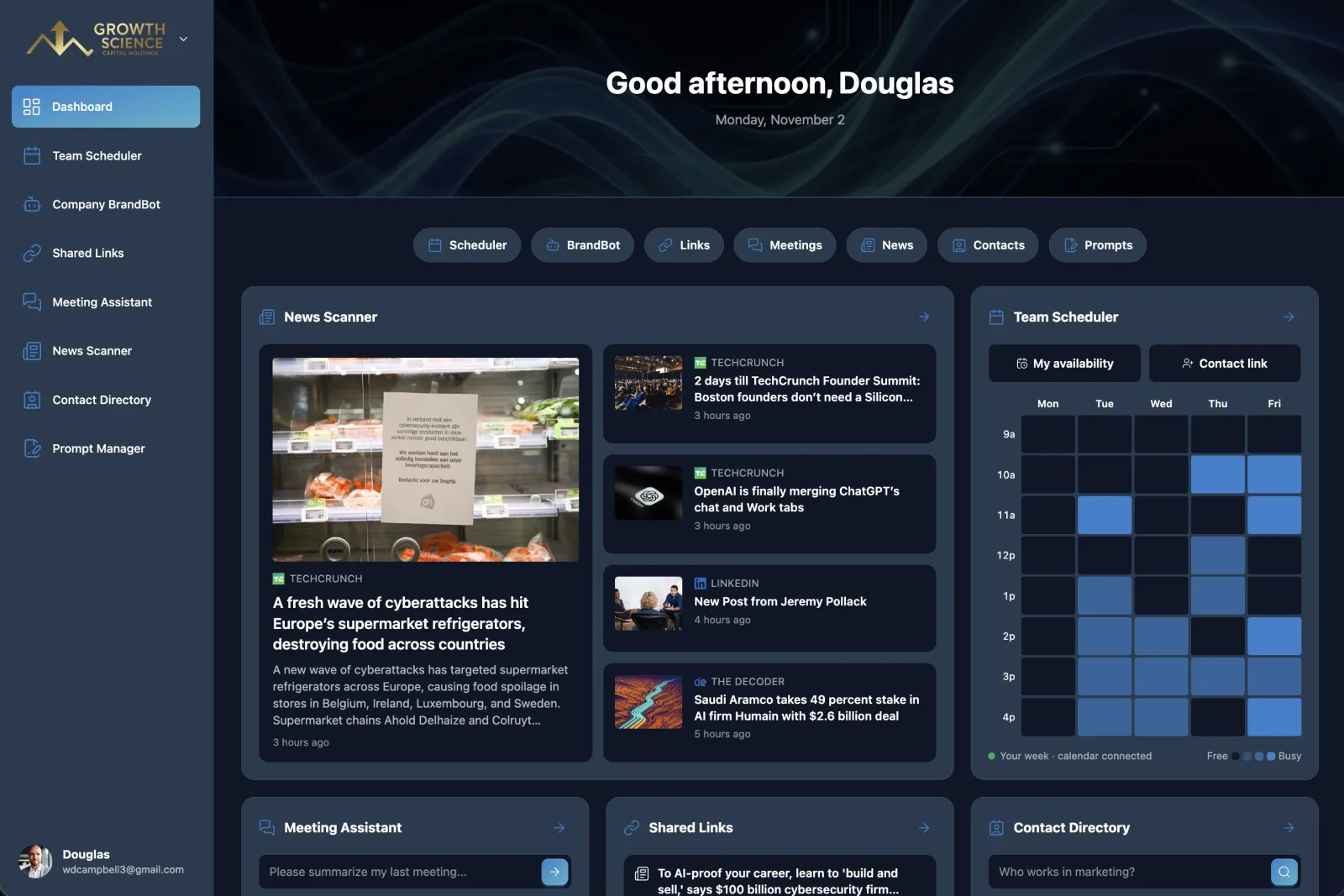
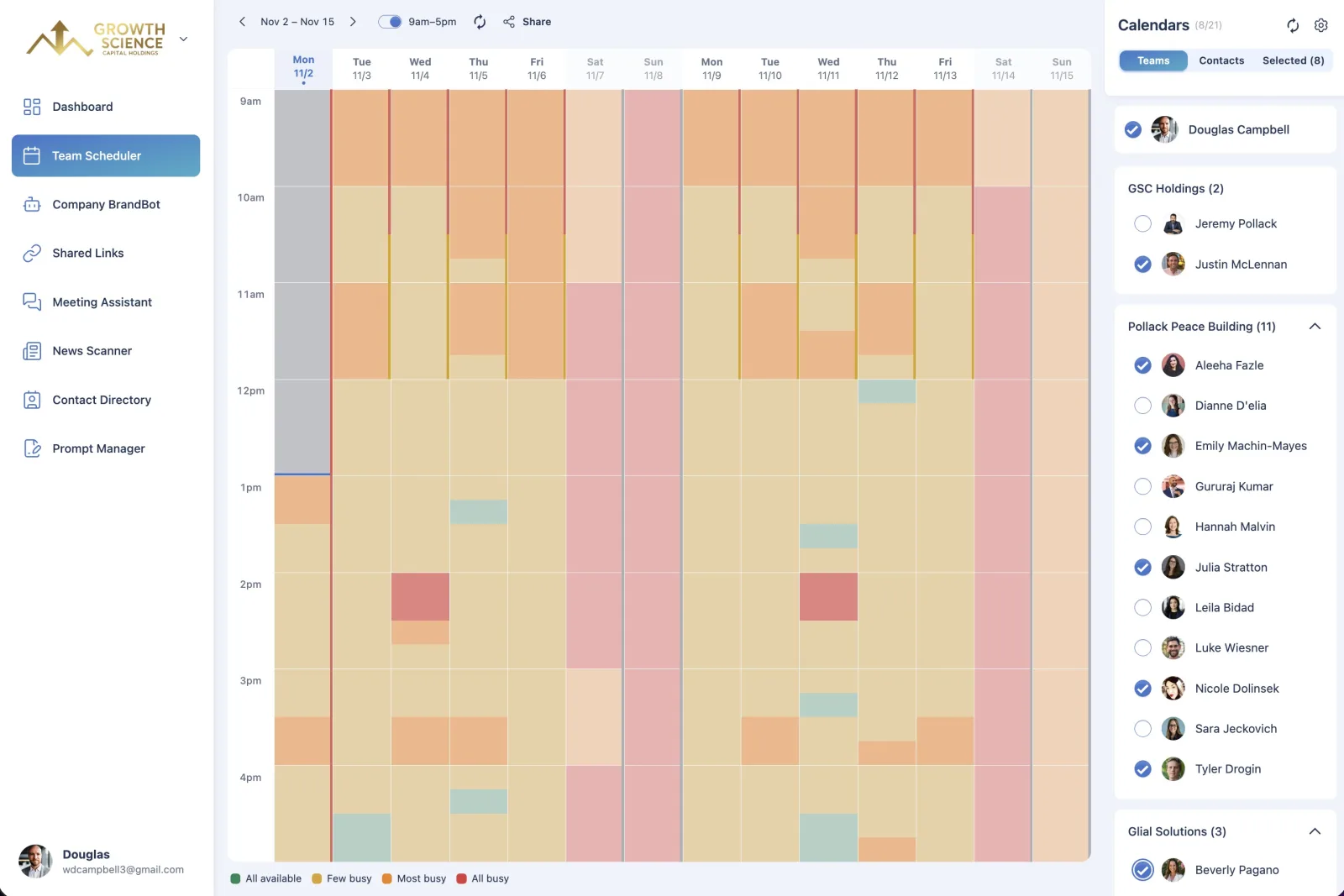
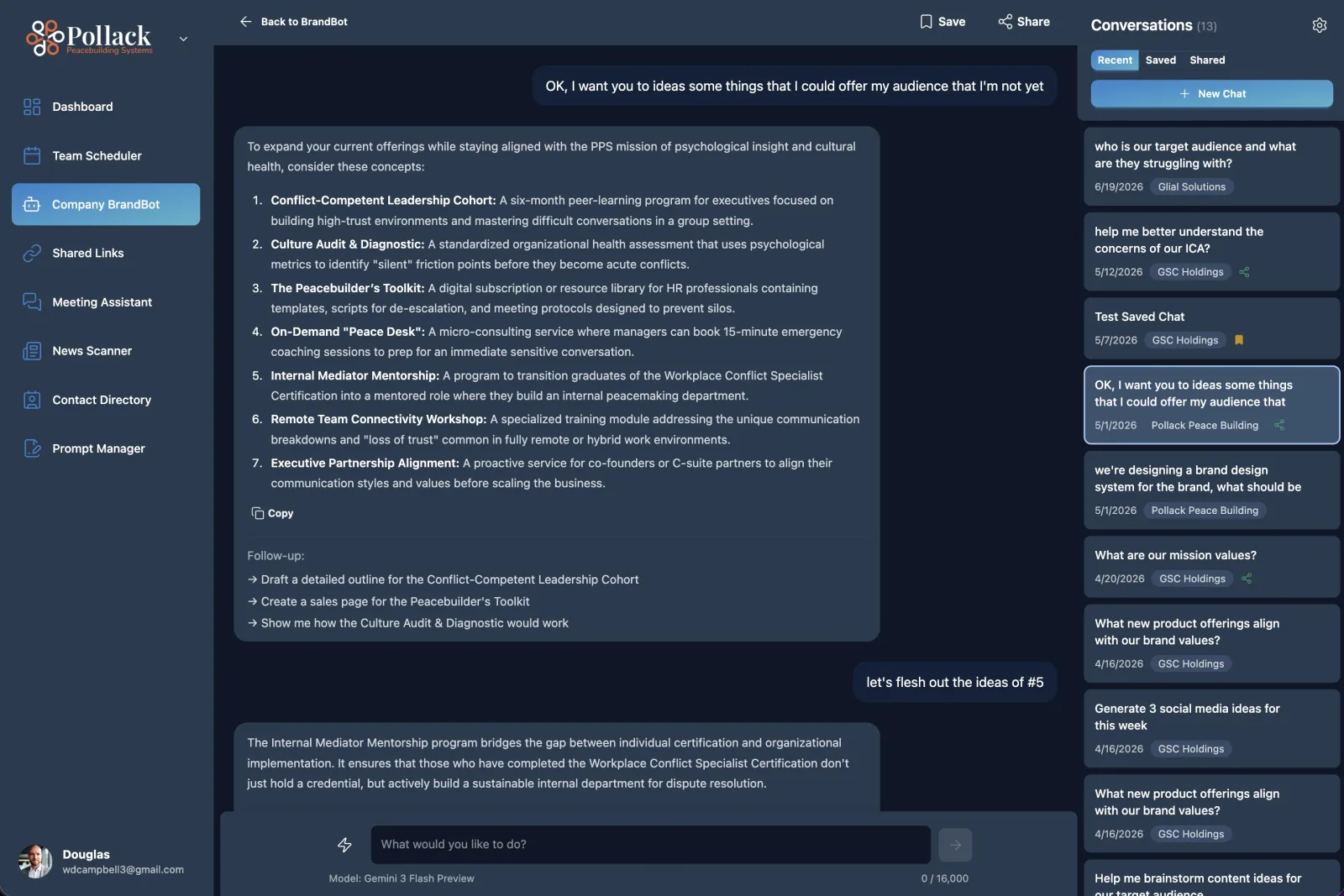
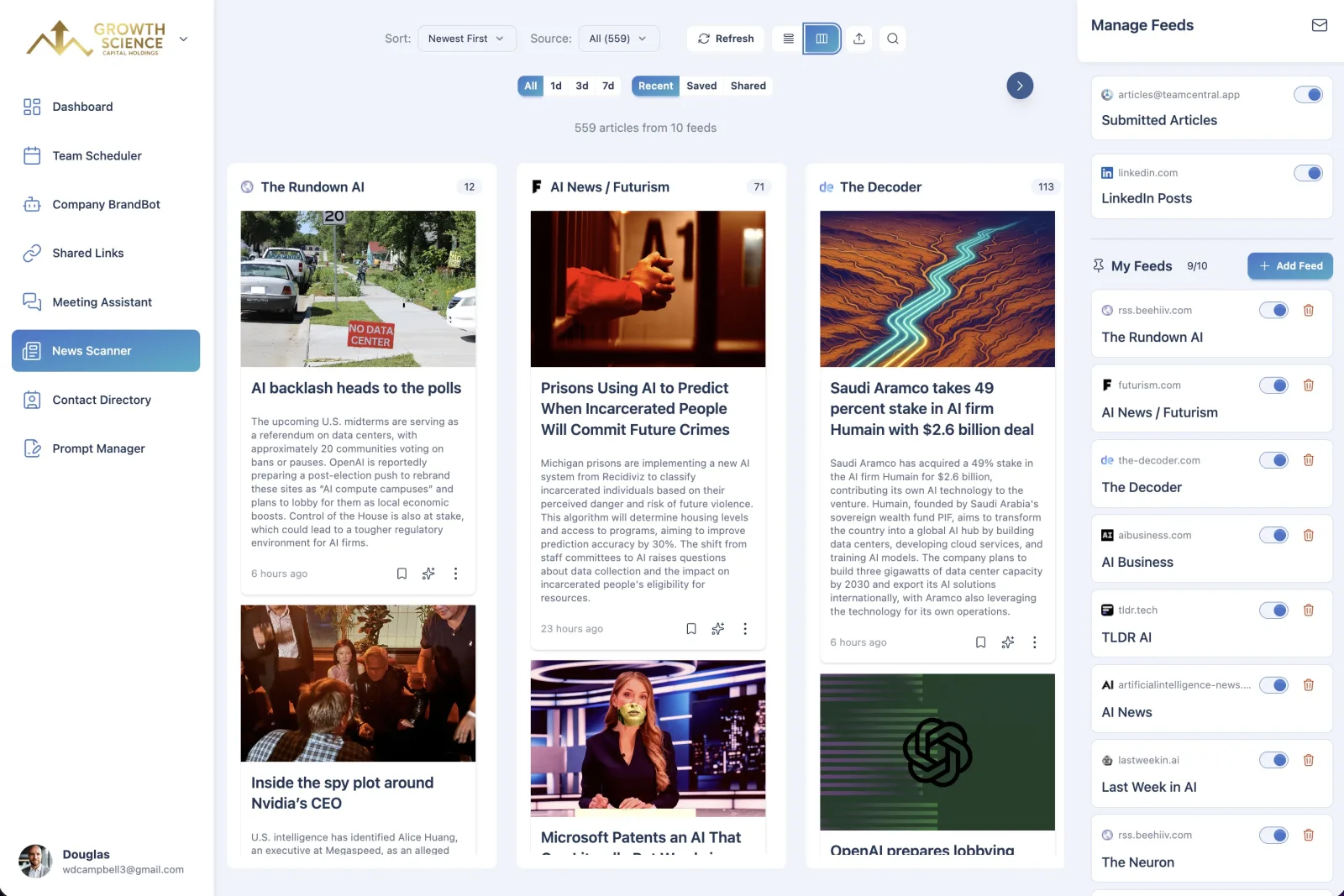
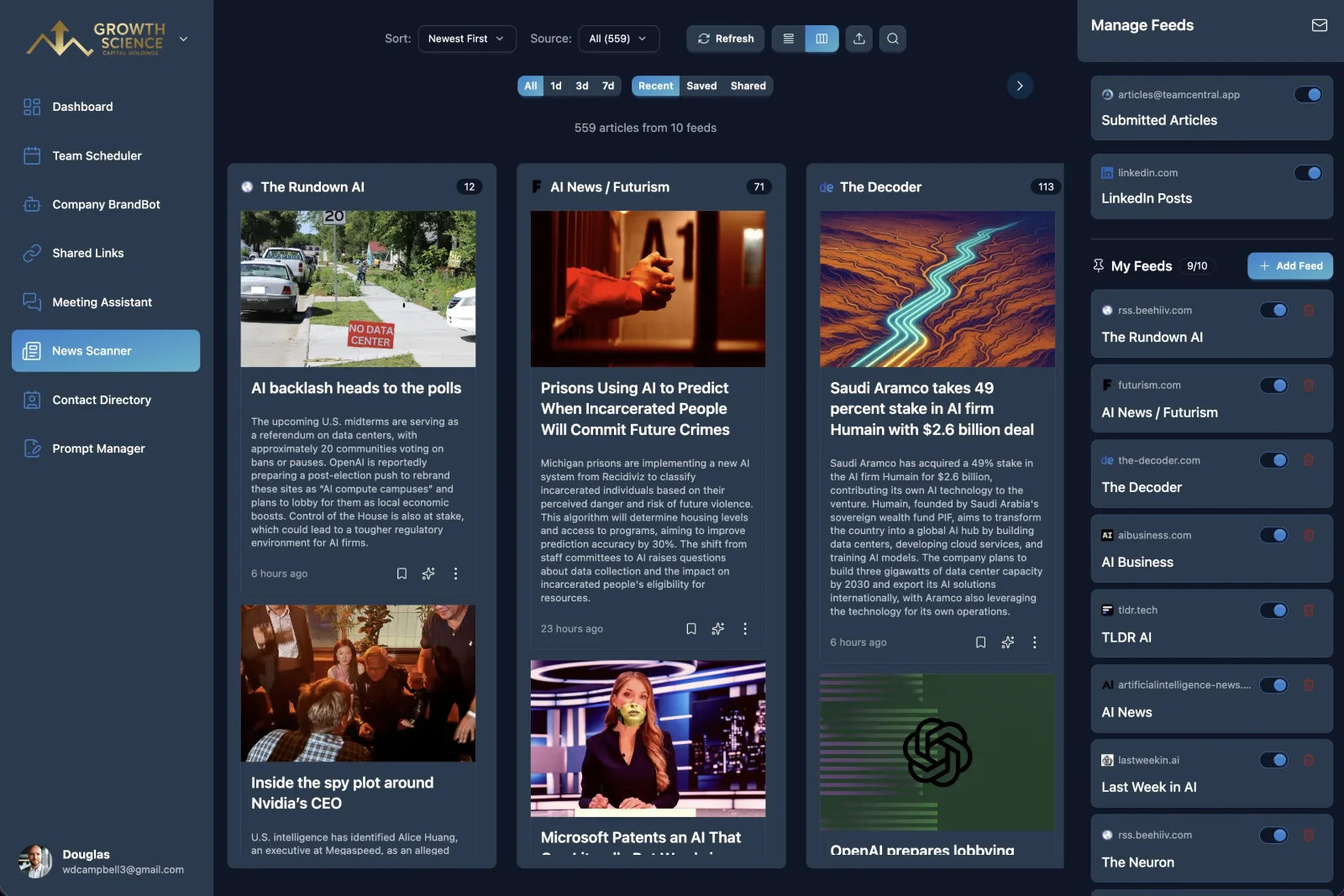
TeamCentral began as a client's internal tool and became a multi-tenant AI toolkit for consultants and small teams: a cross-organization scheduler, meeting assistant, BrandBot for on-brand writing, news scanner, contact directory and prompt manager.
I designed and developed it all with Claude Code, including accounts, Stripe billing and a Claude and ChatGPT connector.
What I learned
- Design thinking matters more with AI: the hard part is still deciding what to build, and why
- How to brainstorm, spec out, develop and test security end to end
- Building a custom MCP connector so Claude and ChatGPT can use it directly
- Prototypes are easy; accounts, billing, hardening and onboarding make them real
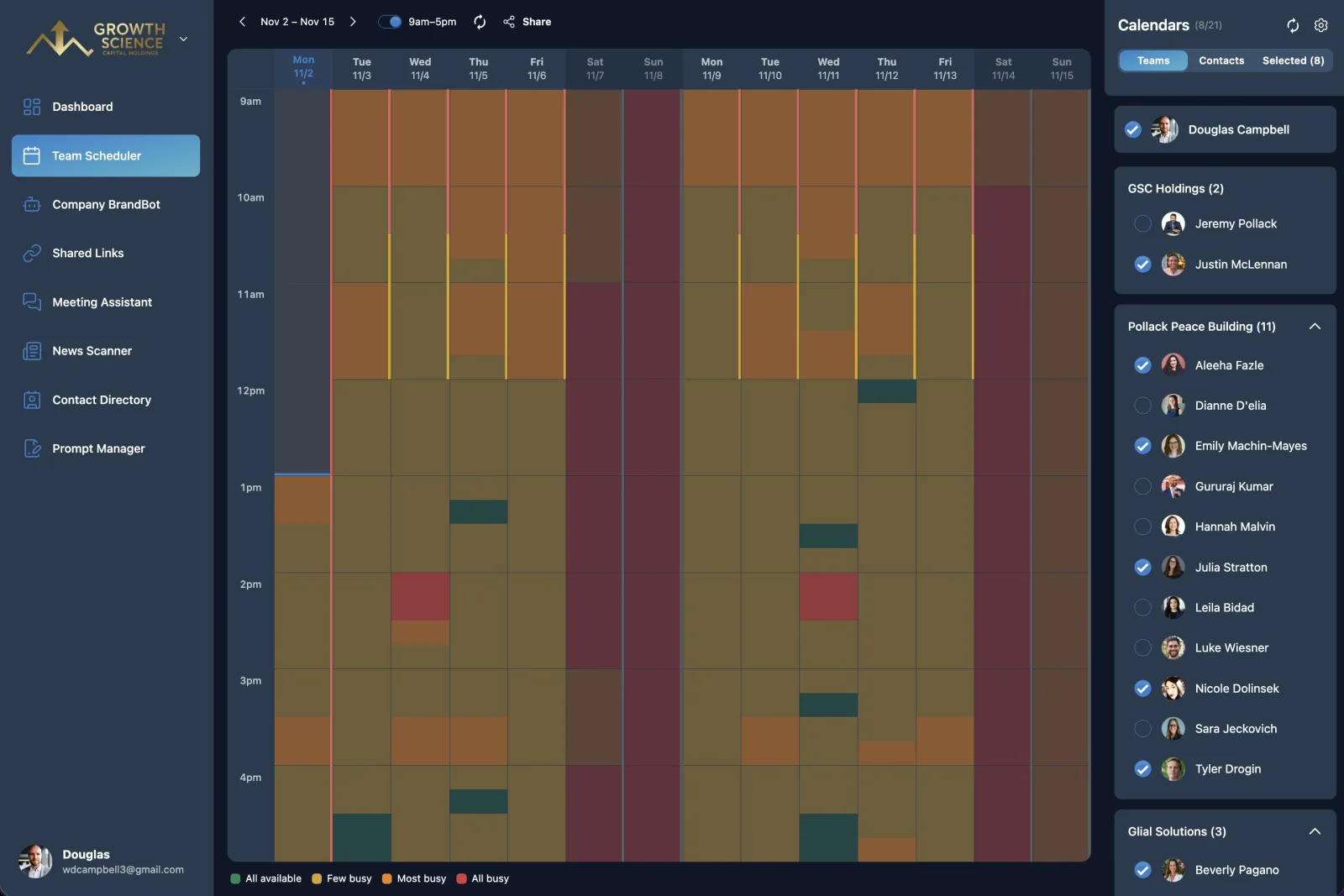
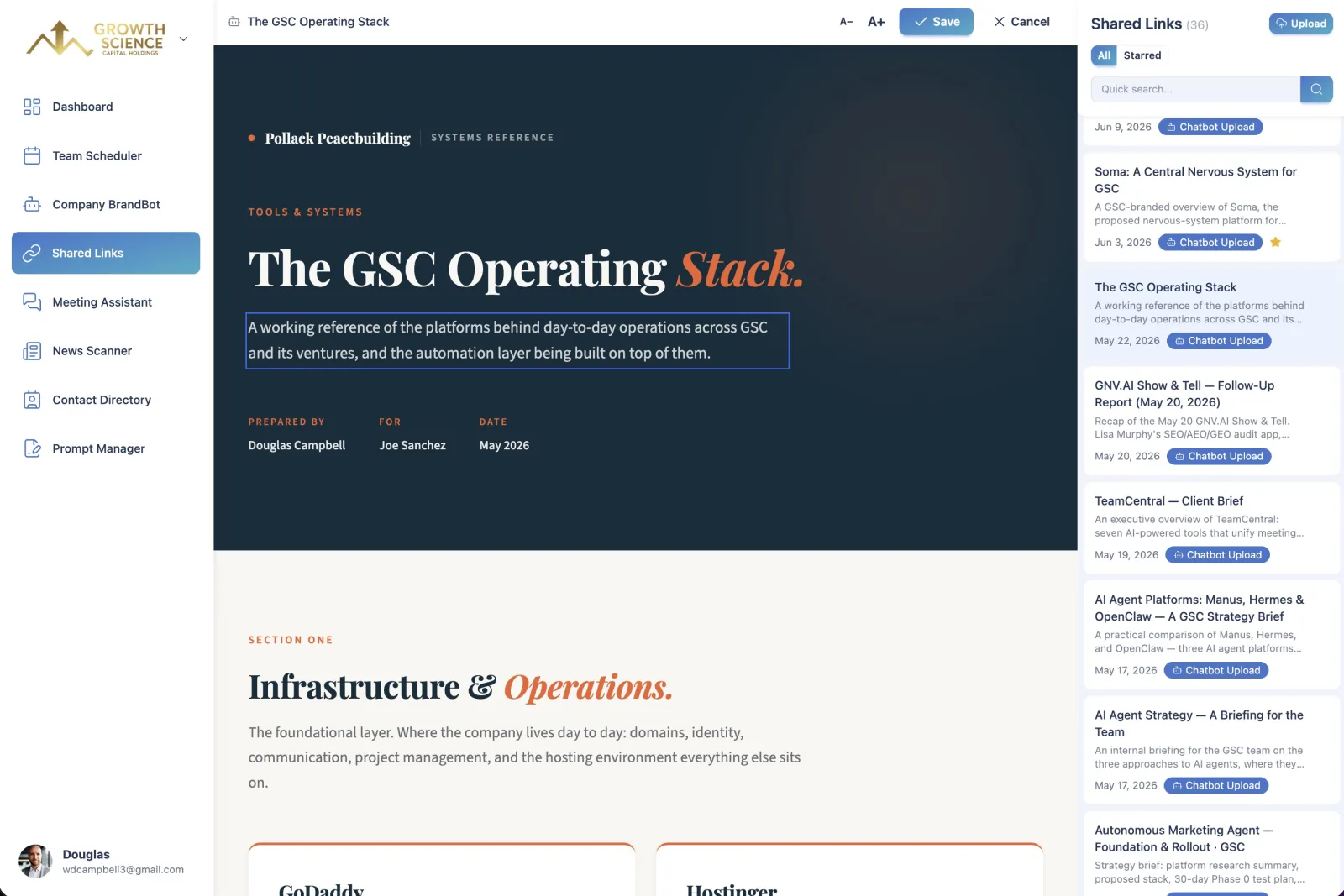
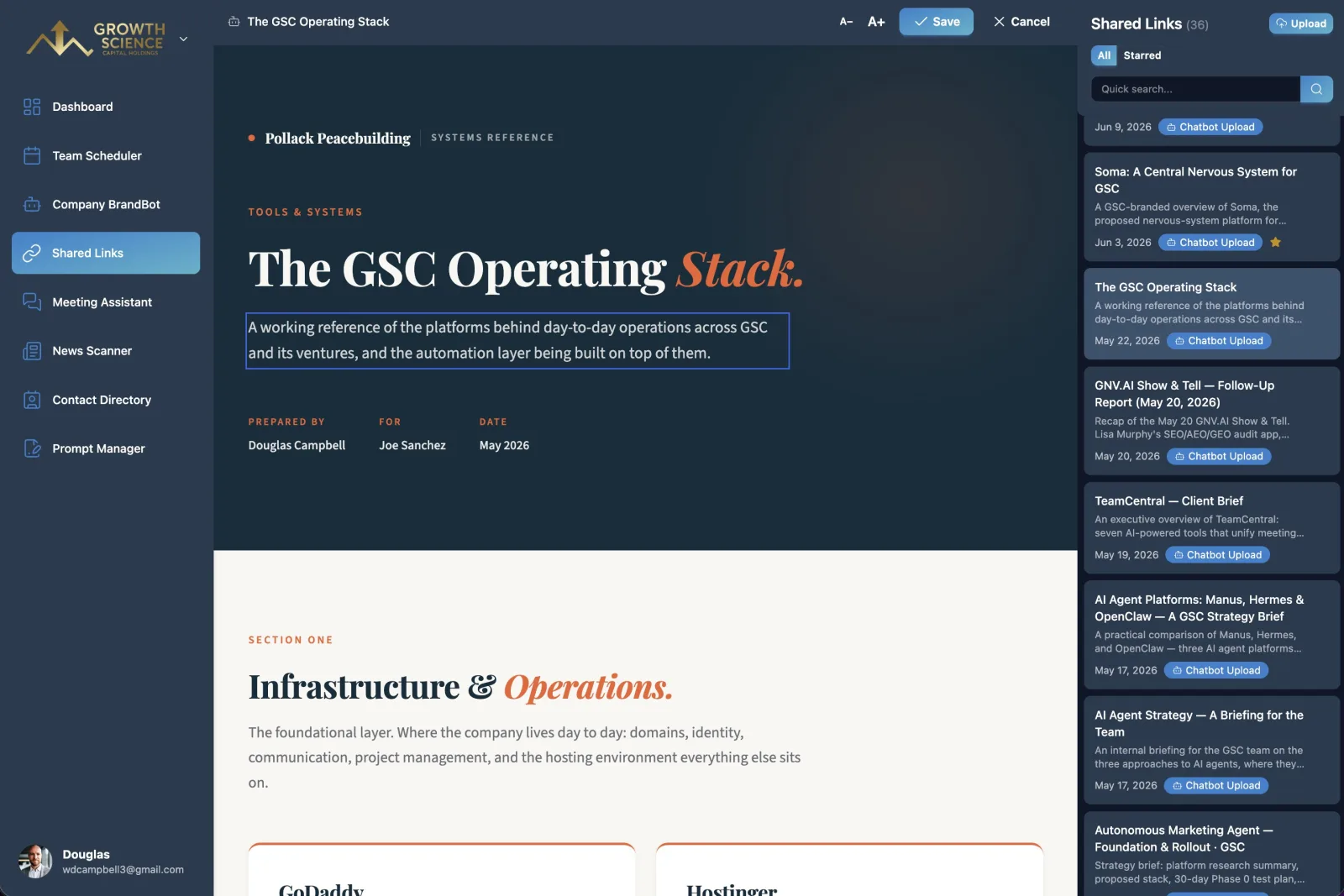
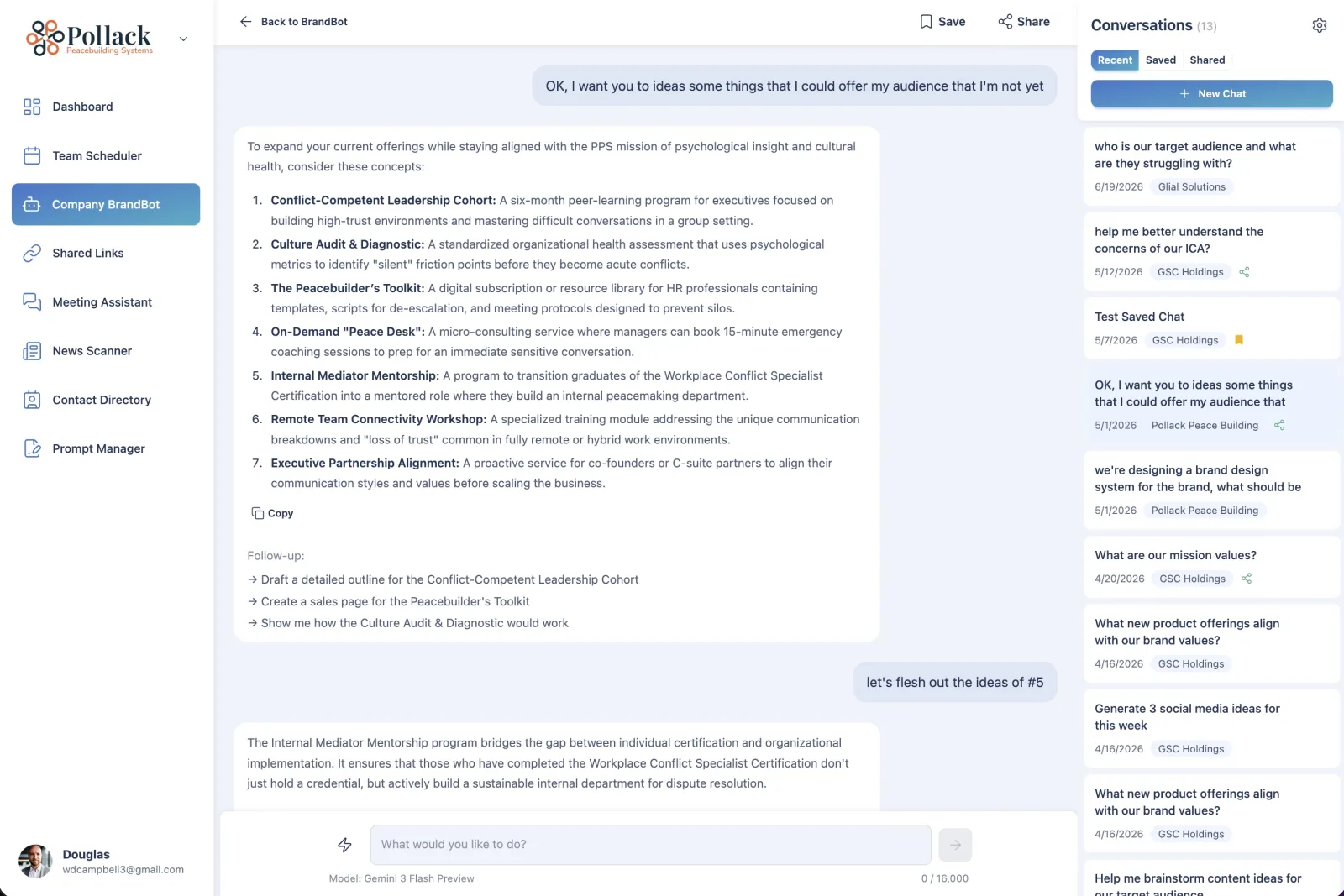
"Douglas transformed how our team works together. His tool for booking availability across our ventures was a huge upgrade, and so were his systems for on-brand copy and visuals, meeting summaries, and sharper sales calls. The team also loved his regular Claude workshops."

Jeremy Pollack
Earlier experiments
Smaller builds.
2024–2025 · RAIZOR
Agent Otto
Content automation on Make.com and Softr that writes, designs and publishes for a few clients, and still makes The RAIZOR Report weekly.


2026 · UF Spark
UF Spark Mentoring Hub
A mentoring platform for UF's startup program, developed with Claude and ready to import meetings with per-student, password-protected sections.


2026 · Growth Science Capital
A design system for team assets
A full design system for PDFs, slides and more, accessible from anybody's AI chatbot of choice for cohesive branding.
Want to build something together?
RAIZOR builds the client versions.
My studio sets these up for founder-led teams. Or let's compare notes.