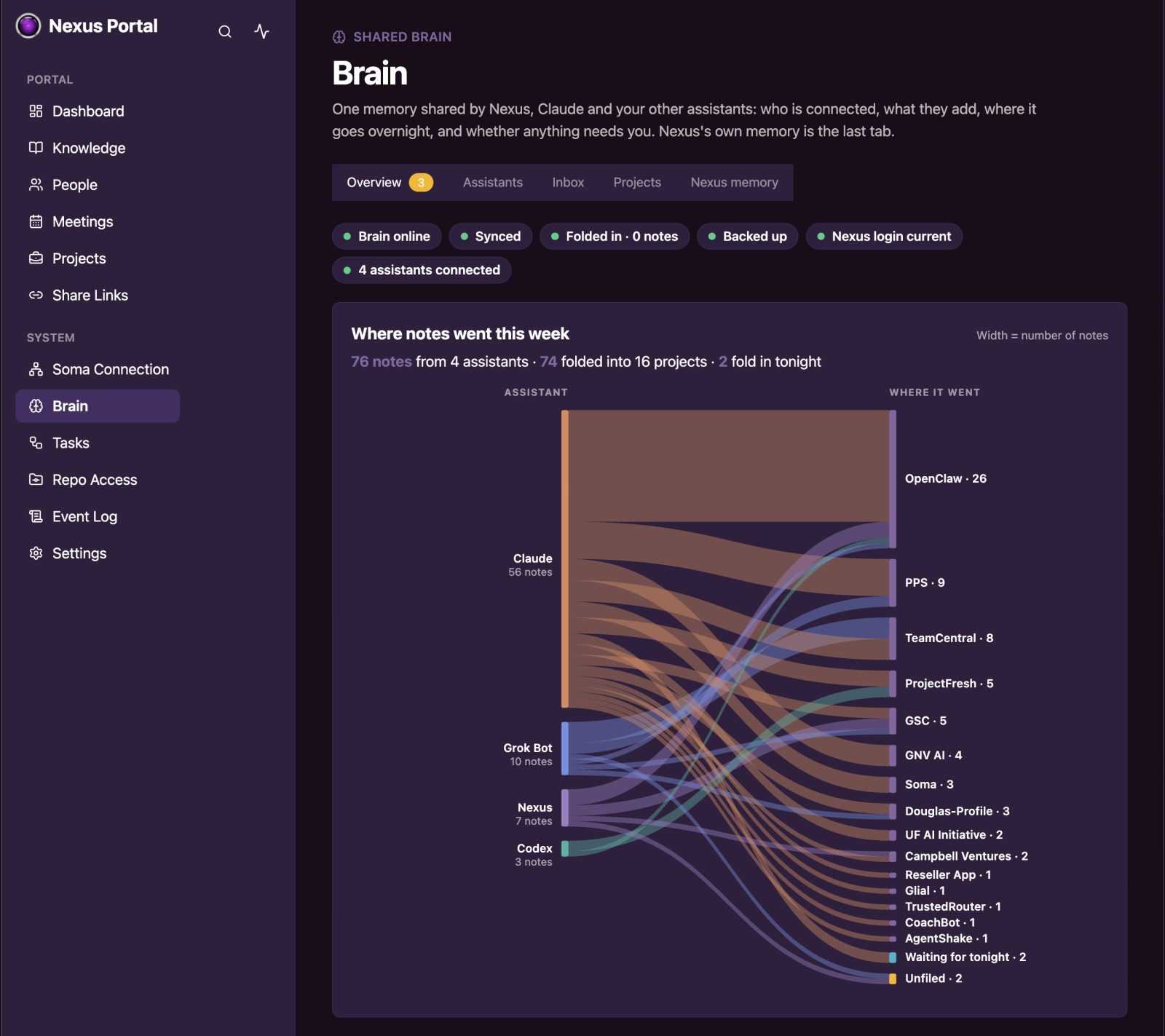
ORIGINAL POST (June 11th, 2026): This morning I set Claude Fable on its first task. I’m building a complex multi-tenant agentic system for my venture company, centered around a single-source-of-truth brain. This week I explored a few different directions and I now have three different folders full of files, each with their own benefits. It’s a complex spider web of ideas and technologies.
So I just spent about 45 minutes writing a prompt for Fable to review the old versions, understand the goal of the final direction, ask me questions, combine the best parts, and then create a stand alone folder structure, along with detailed hand off instructions, which I will send to to a fresh install Ubuntu Linux machine.
THE GOAL: Once the final install folder is place on the new machine, I’ll give Claude the handoff prompt, go away, and return an hour later, hoping to have a good amount built! Well, at least that’s the dream 🙂
…And pushing SEND now… Stay tuned!
[Right after this post, Fable was taken offline by order of the US government. But I had enough to get started for two weeks, executing on this project, before Fable returned just in time to check my work]
Claude Fable is back! Two weeks ago I set it loose on the most complicated automation project I’ve ever worked on: reconciling a spreadsheet with millions of dollars in transactions across tens of thousands of records spanning the last five years. My company’s lead and client tracking lived in a 10+ tab monster where most inputs were manual and the inter-tab calculations only partially worked. It ate up man-hours every week on a mind-numbing task that constantly broke. The perfect high-value automation project.
So I started with planning. I uploaded the old sheet (10 tabs, 20,000+ records) to Fable with a very detailed prompt. It churned for about 30 minutes and produced an entirely new, perfectly interconnected spreadsheet: reorganized, far more user-friendly, fully interconnected, with a reporting layer built specifically for the executive team to pull insights from. Disparate records, finally connected across all ten tabs, letting our C-suite understand leads, sources, client lifetime value, and more through plain conversational AI.
This is the value of structured data.
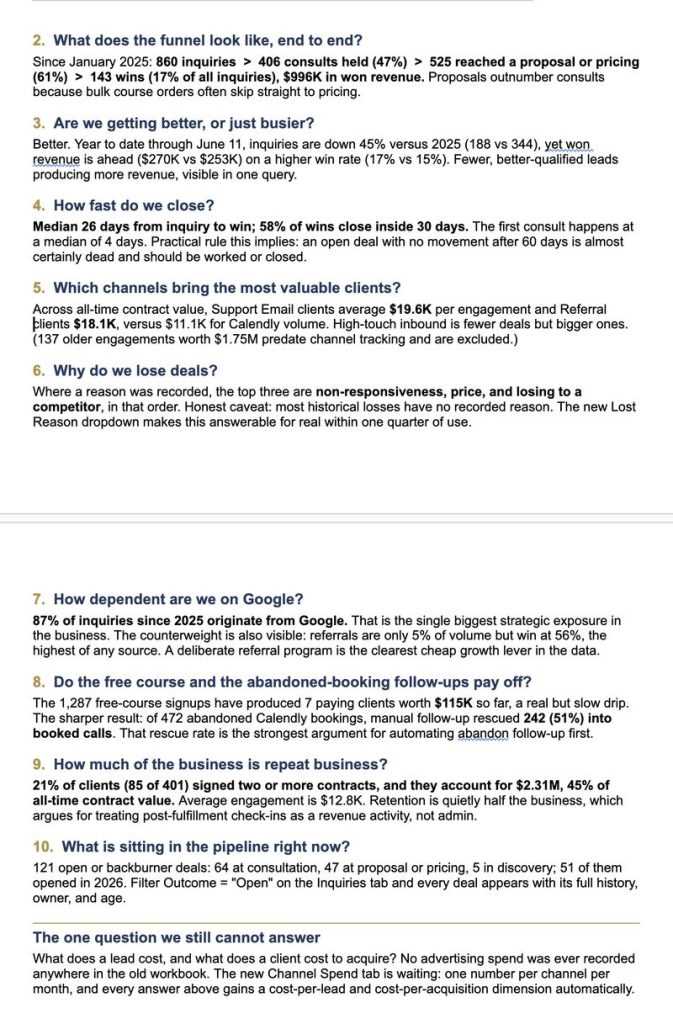
For initial presentation, I had it generate a companion doc of questions the CEO could ask of the newly organized data, and I presented it today.
CEO: “Looks awesome. What would it take for these answers to contain our real data?”
Me: “That IS our real data!”
He was mind-blown. Hours of work instead of hiring a pricey data analyst for the better part of a week. Some of the formulas that I had to create for the sheet were the length of a paragraph and only possible with the help of AI.
Then Fable went offline and the manual work began. A pretty spreadsheet is one thing but getting all your data into it (and keeping it in sync) is another. So I spent the last week wiring up the automations to keep it fed: Calendly, GoHighLevel, ClickUp, and other platforms passing data back and forth through n8n to keep everything current as a single source of truth. A real brain bender, but I just about wrapped it yesterday, just in time for Fable to come back and check my work.
If you want to use AI and automation on a project like this, it’s helpful to start at the end – with what the deliverable should LOOK like, in this case the finished reporting layer, and then work backward to breath life into it.
Since the beginning of this project I’ve even begun to use AI to even create the automations in n8n. Instructing and managing that comes with its own complexities but as I get my head around it, there’s going to be some next level skills unlocked 🚀